
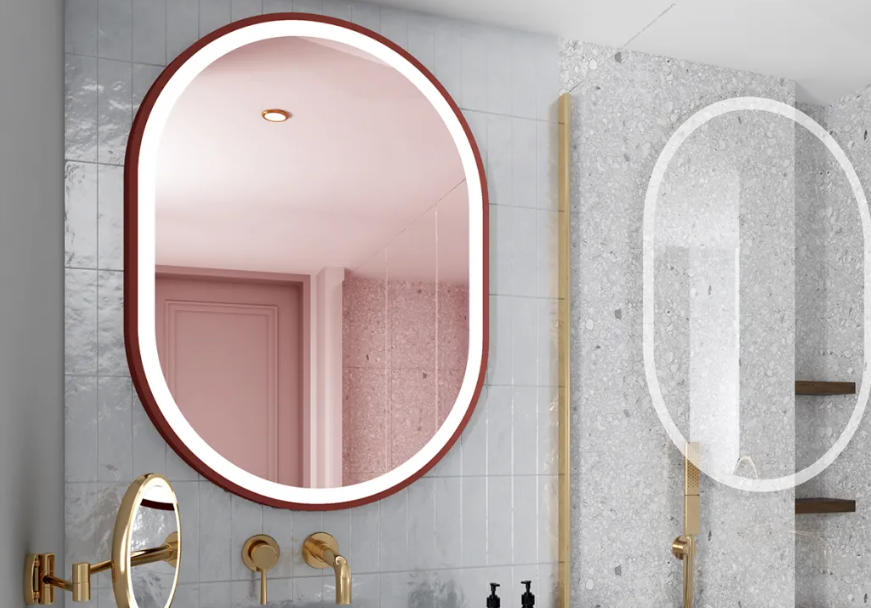
What Exactly Is a Front-Lit Mirror?
A front-lit mirror features LED lighting positioned along the front edges or integrated into the surface of the mirror. The light is directed forward toward the user, creating bright, focused illumination.
This direct lighting provides clear visibility and helps reduce shadows on the face, making front-lit mirrors well suited for detailed tasks such as shaving, grooming, or applying makeup. By illuminating the face evenly, they improve accuracy compared to relying on overhead lighting alone.
Front-lit mirrors are designed primarily for functionality. While they can still contribute to the overall look of a space, their main purpose is to deliver strong, reliable lighting for everyday use. The effect is more direct and defined, rather than soft or ambient.
Key Features of a Front-Lit Mirror
- Bright, direct lighting suitable for grooming tasks
- Forward-facing illumination that reduces facial shadows
- Even lighting across the face for improved visibility
- Often includes dimmable lighting options
- May offer adjustable colour temperature settings
- Designed for task lighting rather than ambient effect
What Exactly Is a Backlit Mirror?
A backlit mirror features LED lighting installed behind the mirror, typically around its edges. The light is directed outward onto the surrounding wall, creating a soft, even glow that forms a halo effect around the mirror.
This lighting is indirect and diffused rather than focused on the user’s face. As a result, it produces a gentle, uniform illumination that reduces harsh shadows and minimises glare. The mirror often appears to “float” against the wall, contributing to a clean and modern visual effect.
Backlit mirrors are commonly used to enhance the overall atmosphere of a space. The soft lighting helps create a calm, balanced environment, making them well suited to contemporary interiors and settings where ambient lighting is preferred.
Key Features of a Backlit Mirror
- Soft, diffused lighting that reduces shadows
- Even illumination across the mirror surface
- Minimal glare due to indirect light direction
- Integrated LED lighting with low heat output
- Clean, modern appearance that complements contemporary design
- Suitable for ambient lighting and enhancing the overall space
What Are the Differences Between Backlit and Front-Lit Mirrors?
Aesthetic
Backlit mirrors provide a subtle and refined aesthetic. The soft halo effect creates a floating appearance, allowing the mirror to blend naturally with surrounding design elements rather than drawing direct attention. This makes them well suited to interiors that aim for a calm, modern, or relaxed atmosphere, including styles such as minimalist, elegant, or cozy spaces.
Front-lit mirrors create a more prominent visual presence. The direct and brighter illumination draws attention to the mirror, making it a stronger focal point within the room. This type of mirror is often used in spaces that prioritise clarity and definition, contributing to a more contemporary or functional aesthetic.
Functionality
Backlit mirrors provide general illumination that is suitable for everyday use, but the indirect lighting may not always offer the level of clarity needed for precision tasks such as makeup application or detailed grooming.
Front-lit mirrors are designed to deliver brighter, more direct lighting. This makes them well suited for tasks that require accuracy, such as shaving or applying makeup, where clear and focused illumination is important.
Space and Style Fit
Backlit mirrors typically feature sleek, minimalist designs. With the lighting hidden behind the mirror, they create a clean and modern appearance that integrates smoothly into contemporary interiors.
Front-lit mirrors often include visible light strips or panels on the mirror surface. These elements can highlight design features such as digital displays, sensors, or frame details, adding visual interest and making the mirror a more noticeable feature within the space.
LED Placement
Backlit LED mirrors have LEDs hidden around the mirror’s edge or behind it, with light directed toward the wall to create a soft halo effect. This produces a warm, ambient glow and is mainly used for visual effect and general atmosphere.
Front-lit LED mirrors feature LEDs positioned behind a light strip or panel on the mirror’s surface, with light directed forward toward the user. This creates crisp, direct illumination, making them suitable for close-up tasks such as shaving or applying makeup where clear visibility is required.
Lighting Effect
The lighting effect differs between backlit and front-lit mirrors due to how the light is distributed.
Backlit mirrors produce a soft, even, and diffused glow across the surface. The light is dispersed rather than concentrated, which helps reduce harsh shadows and creates a subtle ambient effect. This type of lighting is often used to enhance atmosphere and provide a calm, balanced visual experience.
Front-lit mirrors provide more direct and focused illumination. The light is projected onto the mirror surface and the user’s face, resulting in brighter and more defined lighting. This makes the illumination more concentrated, which improves visibility for tasks but can create stronger shadows and highlights compared to backlit lighting.
Shadow and Glare Management
Backlit mirrors produce soft, diffused light, which helps reduce shadows and creates a more comfortable viewing experience. This type of lighting is generally easier on the eyes, particularly in low-light conditions such as early morning use.
Front-lit mirrors concentrate light onto the mirror surface and the user’s face. Well-designed models can control glare and avoid hotspots, but if the lighting is not properly diffused, it may appear overly bright or create uncomfortable glare.
Installation and Power Needs
Backlit and front-lit mirrors differ in how they are installed and how their lighting systems are powered, although the differences are generally practical rather than complex.
Backlit mirrors are typically designed to conceal the light source behind the mirror, which often requires a hardwired connection to maintain a clean, “floating” appearance. Proper installation usually involves a flat wall and careful positioning to allow the light to disperse evenly onto the surrounding surface. In some cases, the lighting and wiring are integrated during earlier stages of construction.
Front-lit mirrors are usually mounted directly onto the wall surface, with lighting integrated into the front of the mirror. Because the light is directed forward, they do not rely on wall reflection, which makes placement more flexible. Depending on the design, they may be plug-in or hardwired, and some models include additional features such as sensors or defoggers.
Cost
Backlit mirrors typically involve higher upfront costs. The need for concealed lighting, integrated wiring, and more precise installation increases both product and installation expenses. This type of mirror is often used in larger or more design-focused spaces where a refined visual effect is required.
Front-lit mirrors are generally more cost-effective. Since the lighting is integrated on the front and does not rely on hidden installation, they are easier to install and often require less complex setup. This makes them a more budget-friendly option, with greater flexibility to use simpler or more affordable lighting solutions.
Energy Use
Both backlit and front-lit mirrors typically use LED lighting, which is more energy-efficient than traditional fluorescent or incandescent options. LEDs consume less electricity, have a longer lifespan, and generate less heat, making them suitable for long-term use.
In general, backlit mirrors may consume slightly less power because their illumination is more diffused and often lower in intensity. Front-lit mirrors, with their brighter and more direct lighting, may require more energy to achieve the higher illumination levels needed for task lighting.
Front-Lit Mirror Benefits
- Provides clear, direct lighting suitable for grooming tasks such as shaving or applying makeup
- Illuminates the face evenly, helping to reduce shadows caused by overhead lighting
- Offers strong, focused illumination that improves visibility and clarity
- Can serve as the primary light source for the vanity area, especially in spaces without natural light
- Often includes adjustable brightness and colour temperature settings
- Easier to install compared to backlit mirrors due to more straightforward mounting
- Typically more affordable in terms of initial product and installation cost
- Allows flexibility in lighting direction and positioning depending on the design
- Well suited to projects where practicality and lighting performance are prioritised
Front-Lit Mirror Disadvantages
- Less effective at creating soft, ambient lighting compared to backlit mirrors
- Direct lighting can feel too bright or intense, especially without dimming control
- May create a less relaxed atmosphere in spaces designed for comfort or spa-like experiences
- Visible light strips or panels can interrupt the clean appearance of the mirror
- Often perceived as more functional than decorative in design
- Does not provide the soft wall-reflection effect that enhances depth and ambience
Backlit Mirror Advantages
- Provides soft, ambient lighting that enhances the overall atmosphere
- Creates a relaxed and comfortable environment, especially suitable for low-light use
- Diffused light reduces glare and is easy on the eyes
- Produces a clean, uniform glow across the mirror surface
- Integrated lighting design delivers a streamlined, modern appearance without visible fixtures
- Complements contemporary and minimalist interior styles
- Helps add depth and a sense of luxury to the space
- Can highlight surrounding wall finishes such as tiles or textured surfaces
- Uses energy-efficient LED lighting with low heat output
Backlit Mirror Drawbacks
- May not provide sufficient direct lighting for precision tasks such as shaving or detailed makeup
- Indirect light can leave parts of the face in shadow, especially if overhead lighting is also positioned behind the user
- Often requires additional lighting sources, such as ceiling lights or wall sconces, to achieve adequate task illumination
- Installation can be more complex due to concealed lighting and wiring requirements
How to Choose Between Backlit and Front-Lit Mirrors?
Choosing between backlit and front-lit mirrors depends on lighting requirements, space conditions, and how the mirror will be used on a daily basis.
Consider Bathroom’s Lighting Needs
A backlit mirror works well as a supplementary light source in bathrooms that already have sufficient ceiling or natural lighting.
In contrast, a front-lit mirror provides more focused illumination, making it a better option in spaces where additional direct lighting is needed for everyday tasks.
Think About Bathroom Size and Layout
Backlit mirrors, with their soft and diffused glow, can help create a sense of openness and make smaller bathrooms feel more spacious. Their floating effect also enhances the visual appearance of compact spaces.
Front-lit mirrors are more suitable for larger bathrooms where stronger, task-focused lighting is required and space allows for more direct illumination.
Assess Primary Use for the Mirror
If the mirror is mainly used for grooming tasks such as applying makeup or shaving, a front-lit mirror provides the clarity and brightness needed.
If the goal is to create a more relaxed atmosphere with softer lighting, a backlit mirror is more appropriate.
Consider the Overall Bathroom Decor
Backlit mirrors are often chosen for minimalist or hotel-inspired interiors, where a subtle and refined aesthetic is preferred.
Front-lit mirrors suit contemporary designs where functionality is prioritised, while still contributing to a clean and modern appearance.
Is a Dual-Lighting Mirror the Best of Both Worlds?
If there is a need to balance functional task lighting with a softer, ambient effect, dual-lighting mirrors offer a combined solution. These mirrors integrate both front lighting and backlighting into a single unit.
Versatility in Application
Dual-lighting mirrors allow the two lighting systems to be controlled either independently or together. Front lighting can be used when clear, shadow-free illumination is needed for tasks such as shaving or applying makeup. Backlighting can be used separately to create a softer, more relaxed atmosphere.
Solving the Compromise
By combining both lighting types, dual-lighting mirrors remove the need to choose between function and aesthetic. They provide the brightness required for practical use while maintaining the halo effect associated with backlit designs.
Although these mirrors may involve higher cost due to additional LED components, they offer greater flexibility and adaptability for spaces that require both performance and visual appeal.
Popular Features to Look for in LED Bathroom Mirrors
When selecting an LED bathroom mirror, certain features can improve both usability and overall experience. These functions help adapt the mirror to different lighting needs, environmental conditions, and daily routines.
Dimmable Light Settings
Dimmable lighting allows you to adjust brightness based on the time of day and task. Lower light levels can create a softer, more relaxed atmosphere, while higher brightness provides clarity for detailed grooming.
Mirrors with dimming capability offer greater flexibility and help reduce eye strain by adapting light intensity to different conditions.
Anti-Fog Technology
Anti-fog or demister features prevent the mirror from steaming up after showers. This is typically achieved through a built-in heating element behind the glass, which reduces condensation on the surface.
This ensures a clear reflection without the need to wipe the mirror, helping maintain cleanliness and convenience in daily use.
Adjustable Colour Temperature
Colour temperature, measured in Kelvin, affects how light appears and how accurately colours are perceived.
Lower temperatures (around 3000K) produce a warmer, softer light, while higher temperatures (around 6000K) create a brighter, cooler light. Mid-range options (around 4000K) provide a more balanced, neutral appearance.
Mirrors with adjustable colour temperature allow users to switch between different lighting tones, making it easier to adapt the mirror to various environments and preferences.
Touch Sensor Controls
Touch sensor controls provide a clean, button-free interface for operating the mirror. This design improves ease of use while maintaining a streamlined and modern appearance.
Energy Efficiency
LED mirrors are inherently energy-efficient, consuming less power and generating less heat compared to traditional lighting. Some models also include additional energy-saving features, helping reduce long-term energy consumption.
Conclusion
Backlit and front-lit mirrors serve different purposes, and the right choice depends on how the mirror will be used within the space.
Backlit mirrors offer soft, diffused lighting that enhances atmosphere and creates a clean, modern aesthetic. They are well suited to spaces where ambient lighting and visual design are the priority.
Front-lit mirrors provide direct, focused illumination that improves visibility and accuracy. This makes them more suitable for everyday grooming tasks where clear, shadow-free lighting is required.
In many cases, the decision comes down to balancing design and function. Backlit mirrors contribute to the overall look and feel of a space, while front-lit mirrors deliver practical performance. For projects that require both, dual-lighting mirrors can combine these benefits into a single solution.
By understanding the differences in lighting effect, functionality, installation, and cost, it becomes easier to select a mirror that aligns with both the design intent and practical needs of the bathroom.
