
Introduction
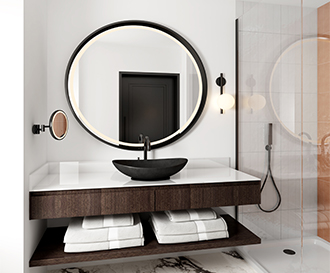
In luxury hotels, LED mirrors are no longer just functional bathroom fixtures—they are a key element in enhancing guest comfort and elevating the overall experience. These mirrors combine sleek design with advanced lighting technology to create an atmosphere of sophistication and convenience.
Modern hotels are increasingly prioritising advanced lighting control to provide guests with customisable illumination, such control improves usability, energy efficiency, and aesthetic appeal.
One of the most effective solutions for achieving this is DALI (Digital Addressable Lighting Interface). DALI enables precise, programmable control of LED lighting, allowing hotel designers and operators to adjust brightness, colour temperature, and integration with room automation systems. By using DALI-controlled LED mirrors, hotels can ensure both superior functionality and a seamless, high-end guest experience.
What is DALI Control?
DALI (Digital Addressable Lighting Interface) is a globally recognised protocol for intelligent lighting control. Unlike conventional lighting systems, which rely on simple on/off switches or basic dimmers, DALI allows individual lights and fixtures to be addressed and controlled digitally, offering precision, flexibility, and automation capabilities.
When integrated with LED mirrors, DALI enables hotels to adjust brightness levels, set customised lighting scenes, and even program schedules for different areas or times of day. This integration ensures that mirrors provide optimal illumination for grooming, ambience, and design aesthetics, while remaining energy-efficient.
Advantages over traditional systems include:
- Individual control: Each mirror or light can be programmed independently.
- Smooth dimming: Avoids flickering and allows gradual transitions.
- Automation-friendly: Integrates with building management systems and smart hotel controls.
- Energy savings: Optimises lighting use based on occupancy or daylight availability.
- Future-proof: Easily scalable and configurable as hotel lighting needs evolve.
By leveraging DALI technology, hotels can provide guests with a sophisticated, responsive, and luxurious lighting experience that standard on/off systems simply cannot achieve.
Benefits of DALI-Controlled LED Mirrors in Hotels
1. Guest Experience Enhancement
DALI-controlled LED mirrors allow for precise ambient, task, and accent lighting, ensuring guests enjoy the perfect illumination for grooming, relaxing, or setting the mood. This level of control enhances the perceived luxury of the room and contributes to a superior overall experience.
2. Energy Efficiency
With automated dimming and scheduling, DALI systems optimise energy consumption by adjusting lighting based on occupancy or time of day. Hotels can reduce energy costs while maintaining consistent lighting quality in every room.
3. Customisation
Guests can enjoy adjustable brightness and colour temperature tailored to their preferences, from bright, cool light for morning routines to warm, soft light for evening relaxation.
4. Integration with Hotel Automation Systems
DALI-controlled mirrors seamlessly connect with smart room controls and building management systems, enabling centralised monitoring and management. This integration simplifies maintenance, enhances operational efficiency, and allows hotels to deliver consistent guest experiences across multiple rooms and floors.
Technical Considerations
1. Mirror Sizing and Placement for Optimal DALI Performance
Correct mirror size and strategic placement are critical for achieving uniform illumination. DALI-controlled mirrors should be positioned to minimise shadows, enhance task lighting, and complement ambient hotel room lighting. Proper spacing ensures that the digital control delivers consistent performance across all mirrors in the room or suite.
2. Wiring and Installation Best Practices
DALI systems require structured wiring for reliable communication between controllers and LED mirrors. Hotels should follow manufacturer-recommended wiring diagrams, use quality connectors, and plan for easy access for future maintenance. Segregating power and signal cables helps prevent interference and ensures smooth operation.
3. Integration with Hotel BMS (Building Management System)
DALI-controlled mirrors can integrate with a hotel’s BMS or smart room control system, enabling centralised monitoring, scheduling, and remote adjustment. This integration supports energy management, operational efficiency, and seamless guest experiences across multiple rooms or floors.
4. Safety and Compliance Standards
LED mirrors must comply with local electrical codes, fire safety regulations, and industry standards. Ensure IP ratings, insulation, and grounding meet requirements for hospitality installations. Using certified components reduces risk and guarantees long-term reliability.
5. DALI vs Other Lighting Control Systems in Hotels
- Comparison with DMX, 0-10V dimming, and traditional switches: DMX is often used for theatrical or decorative lighting; 0-10V provides simple dimming but lacks addressable control; traditional switches offer minimal flexibility.
- Pros and cons of each system: DALI allows addressable control and automation, 0-10V is cost-effective but limited, DMX provides dynamic effects but is complex, and switches are simple but inflexible.
- Why DALI is preferred for hotel LED mirrors: DALI balances flexibility, energy efficiency, and integration, making it the ideal solution for sophisticated hospitality lighting where guest experience, operational control, and scalability are priorities.
Why Choose Luma Mirrors by Gemm London for Your Hotel Project
1. Custom Manufacturing for Large-Scale Projects
Luma Mirrors by Gemm London offers customised production tailored to the specific requirements of hotel chains, large-scale residential developments, and cruise ship interiors. Every mirror can be designed to match size, shape, and lighting specifications, ensuring consistency and alignment with the project’s overall aesthetic.
2. Hospitality-Grade Durability and Finishes
Our LED mirrors are built to withstand high usage and humid environments, making them ideal for hotel bathrooms. Premium finishes not only enhance durability but also maintain the luxurious look expected in high-end hospitality settings.
3. Smart Technology Expertise and Integration Support
Luma Mirrors provides full support for smart lighting and automation integration, including DALI control and compatibility with Building Management Systems (BMS). Our team ensures seamless integration with other smart hotel systems, delivering superior guest experiences and operational efficiency.
4. Project Consultation and Specification Guidance
From initial concept to final installation, Luma Mirrors guides clients through project planning, mirror specification, and installation advice. Our expertise helps interior designers, architects, and hotel operators make informed decisions, reducing risk and ensuring the project meets both functional and aesthetic goals.
Conclusion
DALI-controlled LED mirrors offer far more than modern aesthetics for hotel bathrooms. They combine smart lighting control, energy efficiency, customisation, and seamless automation integration to create a more sophisticated and comfortable guest experience. DALI technology allows to achieve consistent lighting performance while improving operational efficiency and long-term flexibility.
Compared with traditional lighting systems, DALI provides greater control, smoother dimming, and better compatibility with modern hotel automation platforms, making it an ideal solution for premium hospitality environments.
At Luma Mirrors by Gemm London, we specialise in custom LED mirror solutions for hotels, luxury residential developments, and cruise ship projects. From customised sizes and premium finishes to DALI integration and project consultation, our team supports clients through every stage of the specification and installation process.
If you are planning a hospitality or commercial project, contact Luma Mirrors to explore customised LED mirror solutions designed to elevate both guest experience and architectural design.
