
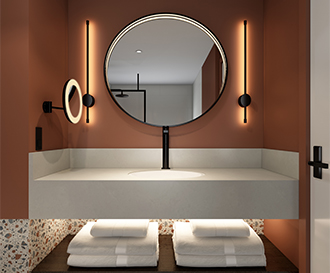
LED mirrors have evolved from simple residential bathroom accessories into essential design and functional elements across hospitality, luxury residential, and commercial interiors. Today, hotels, cruise ships, premium apartment developments, and wellness spaces increasingly rely on illuminated mirrors to enhance lighting quality, improve user experience, and support modern architectural aesthetics.
As demand continues to grow, the differences between commercial-grade LED mirrors and residential LED mirrors have become significantly more important. While residential mirrors are often designed around personal style preferences and convenience, commercial LED mirrors must meet much higher expectations for durability, operational performance, lighting consistency, safety compliance, and long-term maintenance efficiency.
For architects, interior designers, developers, procurement teams, and hospitality operators, understanding these specification differences is critical when selecting mirrors for large-scale projects. Choosing the wrong type of mirror can lead to maintenance issues, inconsistent lighting performance, shorter product lifespan, and higher long-term operational costs.
This article explores the key differences between commercial LED mirrors and residential mirrors, including construction quality, lighting performance, customisation capabilities, compliance requirements, installation considerations, and long-term project value.
What Is a Commercial LED Mirror?
Commercial LED mirrors are designed specifically for large-scale hospitality, residential, and public-use environments where durability, lighting consistency, and long-term operational performance are critical. Unlike retail residential mirrors, commercial LED mirrors are typically manufactured according to project specifications and must meet higher standards for functionality, safety, and reliability.
Designed for High-Traffic Environments
Commercial LED mirrors are commonly installed in spaces that experience continuous daily usage and higher operational demands than standard residential bathrooms.
Hotels
Hotel bathrooms require mirrors that combine luxury aesthetics with reliable performance across hundreds of guest interactions every day.
Cruise Ships
Cruise ship environments require mirrors that can withstand humidity, vibration, and marine conditions while maintaining a premium guest experience.
Luxury Apartments
Large residential developments and premium apartment projects often require consistent mirror specifications across multiple units for design uniformity and easier maintenance.
Public Washrooms
Commercial washrooms in retail, office, and public environments require durable mirrors that can handle constant use and simplified maintenance.
Commercial Wellness Spaces
Spas, wellness centres, gyms, and premium leisure facilities often use illuminated mirrors to enhance ambience, visibility, and customer experience.
Built for Long-Term Operational Performance
Commercial LED mirrors are engineered for demanding operational conditions where lighting systems may run for extended hours every day.
Frequent Daily Usage
Commercial environments typically experience significantly higher usage frequency than residential spaces, requiring stronger construction and more durable components.
Continuous Lighting Operation
Hospitality and commercial facilities often operate mirrors for long periods, making lighting lifespan, heat management, and energy efficiency especially important.
Commercial Durability Expectations
Commercial buyers prioritise long-term reliability, low maintenance requirements, and stable lighting performance over purely decorative features.
Specification-Driven Manufacturing
Unlike retail mirrors that are sold in standard sizes, commercial LED mirrors are usually manufactured according to project requirements and design specifications.
Project-Based Production
Commercial mirrors are often produced for large-scale hospitality, residential, or marine projects with coordinated production timelines.
Custom Dimensions
Architects and designers frequently require custom sizes, shapes, and mounting solutions to match interior layouts and branding concepts.
Lighting Integration
Commercial projects may require integrated lighting systems, dimming controls, anti-fog technology, motion sensors, or smart automation compatibility.
Compliance Requirements
Commercial mirrors may need to meet specific electrical, waterproofing, safety, or marine-grade standards depending on the project environment.
What Is a Residential LED Mirror?
Residential LED mirrors are primarily designed for private homes and individual lifestyle preferences. Compared to commercial mirrors, residential models place greater emphasis on decorative appeal, personal convenience, and smart home compatibility rather than long-term heavy-duty operational performance.
Focused on Personal Lifestyle and Aesthetics
Residential LED mirrors are often selected based on interior style, visual preferences, and everyday comfort rather than commercial durability requirements.
Homeowner Preferences
Homeowners typically prioritise design style, lighting ambience, and personal functionality when choosing bathroom or bedroom mirrors.
Decorative Styling
Residential mirrors are frequently used as decorative focal points, with popular trends including frameless designs, ambient backlighting, and minimalist aesthetics.
Smart Home Integration
Many residential LED mirrors include consumer-oriented smart features such as Bluetooth speakers, touch controls, digital clocks, weather displays, and smart home connectivity.
Lower Daily Usage Requirements
Residential mirrors generally operate in less demanding environments compared to hospitality or commercial projects.
Reduced Operational Hours
Home-use mirrors are typically used for shorter periods each day, resulting in lower lighting and electrical performance demands.
Less Wear and Tear
Private residential environments experience significantly lower usage frequency, reducing long-term mechanical and structural stress on the mirror system.
Lower Environmental Stress
Residential bathrooms usually face fewer operational challenges than hotels or cruise ships, including lower humidity fluctuations and less continuous exposure to moisture.
More Standardised Product Sizes
Residential LED mirrors are often manufactured in standard dimensions for retail convenience and simplified installation.
Retail-Ready Dimensions
Most residential mirrors are available in commonly used sizes designed to fit standard bathroom layouts and furniture dimensions.
Easier Installation
Residential installations are generally simpler and require less coordination compared to large commercial or multi-unit projects.
Consumer-Focused Purchasing
Residential buyers often make purchasing decisions based on style, pricing, convenience, and online product comparisons rather than technical project specifications.
Durability Differences Between Commercial and Residential LED Mirrors
Durability is one of the most significant differences between commercial LED mirrors and residential mirrors. Commercial environments place far greater demands on mirror performance due to continuous daily usage, higher humidity exposure, increased cleaning frequency, and long-term operational expectations. As a result, commercial LED mirrors are typically engineered with stronger materials, more robust structural systems, and higher protection standards.
Commercial Mirrors Require Heavy-Duty Construction
Commercial LED mirrors are built to withstand demanding environments where reliability and long-term performance are essential.
Stronger Mounting Systems
Hotels, cruise ships, and large residential developments often require mirrors with reinforced mounting hardware capable of supporting larger mirror sizes and ensuring long-term installation stability.
Reinforced Frames
Commercial mirrors frequently use stronger internal structures and reinforced framing systems to improve durability, minimise movement, and reduce the risk of damage over time.
Higher Durability Standards
Commercial-grade mirrors are typically designed to handle frequent usage, continuous operation, repeated cleaning, and long-term wear in public or semi-public environments.
Moisture and Corrosion Resistance
Commercial environments often expose LED mirrors to far more challenging conditions than standard residential bathrooms.
Hotel Bathroom Humidity
Hotel bathrooms experience constant occupancy turnover and extended daily use, creating higher levels of humidity and moisture exposure that require improved waterproofing protection.
Cruise Ship Marine Environments
Cruise ship applications introduce additional challenges such as salt air, vibration, and marine humidity, making corrosion resistance and material quality especially important.
Long-Term Anti-Corrosion Protection
Commercial LED mirrors commonly incorporate moisture-resistant components, sealed lighting systems, protective coatings, and anti-corrosion materials to extend operational lifespan.
Residential Mirrors Typically Prioritise Cost Efficiency
Residential LED mirrors are generally designed for lighter daily usage and more budget-sensitive purchasing decisions.
Lightweight Materials
Many residential mirrors use lighter construction materials and simplified mounting systems to reduce production costs and simplify installation.
Simplified Construction
Residential products often focus on visual design and basic functionality rather than heavy-duty structural engineering or long-term commercial durability.
Reduced Commercial-Grade Protection
Compared to commercial mirrors, residential models may offer lower levels of moisture resistance, corrosion protection, and operational lifespan because they are exposed to less demanding environments.
Lighting Performance and Functional Differences
Lighting performance plays a critical role in differentiating commercial LED mirrors from residential models. In commercial environments, lighting is not only decorative but also functional, operational, and closely connected to the overall user experience. Commercial projects often require higher lighting consistency, better reliability, and more advanced integration compared to residential applications.
Commercial Projects Demand Consistent Lighting Quality
Commercial LED mirrors are expected to deliver stable and reliable lighting performance across long operational periods and multiple installation environments.
Uniform Illumination
Hotels, luxury apartments, and commercial wellness spaces often require evenly distributed lighting to eliminate shadows and provide balanced facial illumination for guests and users.
Stable Colour Temperature
Commercial projects typically prioritise consistent colour temperature across all mirrors within a project to maintain design uniformity and a cohesive interior atmosphere.
Long Operational Lifespan
Commercial lighting systems are commonly designed for extended daily operation, requiring high-quality LED components with reliable heat management and long-term performance stability.
Hospitality Projects Focus on Guest Experience
In hospitality environments, LED mirrors contribute directly to comfort, ambience, and perceived luxury.
Ambient Lighting
Backlit and illuminated mirrors help create softer ambient lighting that enhances the overall mood and atmosphere of hotel bathrooms and wellness spaces.
Facial Illumination
Well-positioned mirror lighting improves visibility for grooming, makeup application, and daily routines, helping create a more comfortable guest experience.
Luxury Bathroom Atmosphere
Premium hospitality projects often use LED mirrors as part of a broader lighting strategy to reinforce modern aesthetics, relaxation, and high-end interior design.
Residential Mirrors Often Focus on Decorative Appeal
Residential LED mirrors are more commonly selected based on personal style preferences and decorative trends.
Trend-Driven Lighting Styles
Homeowners often choose mirrors that reflect current interior design trends, including frameless designs, soft backlighting, and minimalist aesthetics.
Feature-Based Purchasing
Residential buyers may prioritise additional features such as touch controls, Bluetooth speakers, digital displays, or colour-changing lighting modes.
Smart Aesthetic Integration
Many residential mirrors are designed to integrate with smart home environments while complementing the visual style of modern bathrooms and bedrooms.
Safety and Compliance Requirements
Safety and compliance standards are significantly more demanding for commercial LED mirrors than for residential products. Commercial environments must meet stricter electrical, waterproofing, and installation regulations to ensure long-term operational safety, especially in hospitality, public-use, and marine applications.
Commercial LED Mirrors Must Meet Higher Safety Standards
Commercial LED mirrors are typically manufactured to comply with stricter industry standards due to their use in high-traffic and professionally managed environments.
Electrical Certifications
Commercial projects often require mirrors to meet recognised electrical certifications and testing standards to ensure safe long-term operation.
Waterproof Ratings
Because commercial bathrooms experience heavy moisture exposure, commercial LED mirrors generally require higher waterproof and moisture-resistant protection for lighting systems and electrical components.
Fire Safety Considerations
Hotels, public buildings, and large residential developments may require materials and electrical systems that align with fire safety regulations and building compliance standards.
Hotel and Cruise Ship Projects Have Additional Compliance Requirements
Hospitality and marine environments introduce further technical and regulatory challenges that standard residential mirrors may not be designed to handle.
Marine-Grade Materials
Cruise ship mirrors often require corrosion-resistant materials and protective finishes capable of withstanding salt air, humidity, and marine operating conditions.
Hospitality Electrical Standards
Hotels frequently specify lighting and electrical systems that integrate with broader building management and energy control systems while meeting commercial hospitality regulations.
Large-Scale Installation Regulations
Commercial projects may involve additional installation, safety, and maintenance requirements due to the scale of the development and the number of units being installed.
Residential Mirrors Usually Have Simpler Compliance Requirements
Residential LED mirrors are generally manufactured according to standard consumer product regulations and face fewer operational complexities.
Consumer Safety Standards
Most residential mirrors are designed to meet standard household electrical and safety requirements suitable for private home use.
Lower Project Complexity
Residential installations are typically simpler, involving fewer regulatory considerations, less coordination between contractors, and lower long-term operational demands compared to commercial projects.
Customisation Capabilities in Commercial LED Mirror Projects
Customisation is one of the defining advantages of commercial LED mirror manufacturing. Unlike residential retail products, commercial projects often require mirrors to align precisely with architectural layouts, interior concepts, lighting strategies, and operational requirements. As a result, custom manufacturing plays a major role in hospitality, cruise ship, and large-scale residential developments.
Commercial Projects Often Require Custom Manufacturing
Commercial LED mirrors are frequently designed and produced specifically for individual projects rather than selected from standard retail catalogues.
Custom Sizes
Hotels, luxury apartments, and commercial wellness spaces often require mirrors in non-standard dimensions to match vanity layouts, wall proportions, and interior design concepts.
Project-Specific Shapes
Architects and designers may specify unique mirror shapes such as oversized rectangular mirrors, arched designs, organic forms, or custom geometric styles to create a distinctive visual identity.
Integrated Branding or Design Themes
Hospitality and luxury residential projects often integrate mirror design into the broader interior concept through customised lighting styles, finishes, edge detailing, or branded design elements.
Integration With Interior Design and FF&E Specifications
Commercial LED mirrors are commonly developed as part of a coordinated interior specification process.
Matching Finishes
Mirror frames, trims, and metal components may be customised to complement taps, fittings, cabinetry, and other FF&E materials throughout the project.
Lighting Coordination
Commercial projects often require mirrors to align with the wider lighting strategy, including colour temperature consistency, dimming systems, and ambient lighting integration.
Architectural Consistency
Large hospitality and residential developments typically require consistent mirror specifications across multiple rooms or units to maintain design continuity and simplify project management.
Residential Mirrors Are More Often Purchased as Finished Products
Residential LED mirrors are generally manufactured as ready-made products intended for retail or direct consumer purchase.
Limited Customisation
Most residential mirrors are available in fixed sizes, standard shapes, and predefined feature combinations with fewer custom options.
Retail-Driven Selection Process
Residential buyers often select mirrors based on style, price, online reviews, and immediate availability rather than detailed project specifications or architectural integration.
Installation Differences Between Commercial and Residential Mirrors
Installation requirements for commercial LED mirrors are typically far more complex than residential installations. Commercial projects often involve large quantities of mirrors, multiple contractors, strict project schedules, and long-term maintenance planning. These factors significantly influence how commercial LED mirrors are designed, manufactured, and installed.
Commercial Installations Require Large-Scale Coordination
Commercial mirror installations are usually integrated into broader construction and fit-out processes involving multiple stakeholders and project phases.
Multiple-Unit Installations
Hotels, cruise ships, and residential developments may require hundreds of mirrors to be installed across multiple rooms or units while maintaining consistent specifications and installation quality.
Contractor Coordination
Commercial installations often require coordination between electricians, interior contractors, project managers, FF&E teams, and lighting specialists to ensure proper installation and system integration.
Project Timelines
Large commercial projects operate under strict construction schedules, making production planning, delivery coordination, and installation efficiency especially important.
Maintenance Accessibility Matters in Commercial Projects
Long-term maintenance considerations play a major role in commercial mirror specification and installation planning.
Easy Servicing
Commercial mirrors are often designed to allow easier access to lighting systems, drivers, and electrical components to simplify future servicing and repairs.
Replaceable Components
Hotels and commercial operators frequently prefer mirrors with replaceable components to reduce downtime and minimise replacement costs over the product lifecycle.
Long-Term Operational Efficiency
Efficient maintenance strategies help commercial operators reduce operational disruption, lower maintenance expenses, and extend the usable lifespan of mirror installations.
Residential Installations Are Usually Simpler
Residential LED mirror installations are generally less demanding and involve fewer logistical and technical considerations.
Single-Unit Installation
Most residential projects involve only one or a small number of mirrors, simplifying installation planning and coordination.
Basic Electrical Requirements
Residential mirrors are typically installed within standard household electrical systems and usually require less complex integration compared to commercial hospitality or marine projects.
Smart Features and Technology Integration
As LED mirror technology continues evolving, smart functionality has become an increasingly important factor in both commercial and residential projects. However, the purpose of smart technology differs significantly between the two sectors. Commercial projects prioritise operational efficiency, reliability, and system integration, while residential buyers often focus more on convenience and lifestyle-oriented features.
Commercial Smart Mirror Features
Commercial LED mirrors are often integrated into larger building systems and designed to support operational consistency across hospitality and commercial environments.
DALI Lighting Systems
Many hospitality and commercial projects use DALI-compatible lighting systems to enable centralised lighting control, dimming functionality, and coordinated ambience management throughout the property.
Sensor Activation
Motion sensors and touchless activation systems are commonly used in commercial environments to improve convenience, reduce energy consumption, and support hygiene-focused bathroom design.
Hotel Automation Integration
Luxury hotels and large-scale developments may integrate LED mirrors into broader smart room systems, allowing coordinated control of lighting, energy management, and guest experience features.
Cruise Ship and Hospitality Technology Requirements
Cruise ships and hospitality environments require smart mirror technology that balances functionality, operational stability, and energy efficiency.
Energy Efficiency
Commercial operators often prioritise energy-saving lighting systems to reduce long-term operational costs and support sustainability goals.
Operational Reliability
Hospitality and marine environments require highly reliable electrical systems capable of maintaining stable performance over extended operational periods.
Passenger Convenience
Smart mirror features in hotels and cruise ships are increasingly designed to improve guest comfort through intuitive controls, anti-fog systems, adjustable lighting, and integrated convenience functions.
Residential Smart Mirrors Focus More on Lifestyle Features
Residential smart mirrors are generally designed to enhance personal convenience, entertainment, and modern home aesthetics.
Bluetooth Speakers
Many residential mirrors include integrated Bluetooth audio systems that allow users to stream music, podcasts, or phone calls during daily routines.
Weather Displays
Digital weather information, clocks, and calendar displays are popular smart mirror features aimed at improving daily convenience for homeowners.
Smart Home Connectivity
Residential LED mirrors are increasingly integrated with smart home ecosystems, enabling voice control, app connectivity, and personalised lighting settings.
Cost Considerations and Long-Term Value
Cost structures for commercial and residential LED mirrors differ significantly because the purchasing priorities behind each type of project are not the same. While residential buyers often focus on upfront pricing and visual appeal, commercial projects typically evaluate mirrors based on long-term operational value, durability, maintenance efficiency, and overall project performance.
Commercial Mirrors Have Higher Initial Specification Costs
Commercial LED mirrors generally involve higher upfront investment due to stricter technical requirements and project-specific manufacturing processes.
Premium Materials
Commercial mirrors often use higher-quality materials, reinforced structures, moisture-resistant components, and advanced lighting systems designed for long-term performance.
Commercial-Grade Components
Hotels, cruise ships, and large residential developments typically require more durable LED drivers, lighting systems, mounting hardware, and electrical components capable of handling continuous usage.
Custom Manufacturing
Custom dimensions, customised finishes, integrated smart features, and project-specific production requirements can increase manufacturing complexity and overall project costs.
Long-Term ROI Is More Important in Commercial Projects
Commercial buyers often evaluate LED mirrors based on lifecycle value rather than simply focusing on initial purchasing costs.
Reduced Maintenance
Higher-quality commercial mirrors can reduce maintenance frequency, minimise operational disruptions, and lower replacement costs over time.
Better Durability
Long-lasting construction and commercial-grade protection help extend product lifespan in demanding hospitality and public-use environments.
Improved Guest Satisfaction
In hotels, cruise ships, and luxury residential developments, high-quality lighting and premium bathroom aesthetics contribute directly to user comfort, guest experience, and perceived property value.
Residential Buyers Often Prioritise Upfront Pricing
Residential purchasing decisions are often influenced more heavily by immediate affordability and visual design trends.
Budget-Sensitive Purchasing
Many homeowners compare mirrors based on price, available features, and short-term value rather than long-term operational performance.
Design-Led Decision Making
Residential buyers frequently prioritise aesthetic appeal, trending styles, and decorative features when selecting LED mirrors for personal spaces.
How to Choose the Right LED Mirror for Your Project
Selecting the right LED mirror requires more than simply choosing a design style. Commercial hospitality, cruise ship, and large-scale residential projects must carefully evaluate operational demands, environmental conditions, maintenance requirements, and long-term project goals. Choosing a mirror that aligns with both functional and aesthetic requirements can significantly improve project performance and long-term value.
Questions Commercial Buyers Should Ask
Commercial buyers should evaluate LED mirrors based on technical performance, operational durability, and project-specific requirements rather than purely decorative features.
Expected Usage Frequency
Understanding how frequently the mirror will be used helps determine the required durability level, lighting lifespan, and overall product specification.
Environmental Conditions
Hotels, cruise ships, wellness spaces, and luxury residential developments may expose mirrors to high humidity, moisture, salt air, or continuous operation, all of which influence material and protection requirements.
Maintenance Access
Commercial operators should consider how easily lighting components, drivers, and electrical systems can be serviced or replaced over the product lifecycle.
Lighting Requirements
Different projects may require varying lighting outputs, colour temperatures, dimming systems, anti-fog functionality, or smart control integration depending on the user experience goals.
Key Considerations for Hospitality and Residential Developers
Hospitality operators and residential developers must balance aesthetics, scalability, operational efficiency, and long-term project consistency when selecting LED mirror solutions.
Project Scalability
Large developments often require mirrors to be produced consistently across multiple rooms, units, or phases while maintaining quality and specification uniformity.
Design Consistency
LED mirrors should align with the broader interior concept, including lighting design, finishes, bathroom fittings, and architectural styling throughout the project.
Warranty Support
Reliable warranty coverage and after-sales support are especially important for commercial projects where maintenance disruptions can directly impact operations and guest experience.
Supplier Manufacturing Capabilities
Commercial buyers should evaluate whether the supplier can handle custom production requirements, large-scale manufacturing volumes, quality control standards, and project delivery timelines.
Why Luma Mirror Focuses on Commercial and Custom LED Mirror Solutions
Luma Mirror by Gemm London specialises in commercial and project-based LED mirror solutions designed for hospitality, luxury residential, and marine interior applications. Rather than focusing on mass-market retail products, Luma Mirror works closely with architects, designers, developers, and procurement teams to deliver custom illuminated mirror solutions tailored to the specific requirements of each project.
Hospitality and Luxury Residential Expertise
Luma Mirror’s experience is centred around premium commercial environments where lighting performance, durability, and design consistency are essential.
Hotels
Luma Mirror provides illuminated mirror solutions for luxury hotels, boutique hospitality projects, and high-end guest bedrooms and bathroom environments that prioritise both functionality and guest experience.
Apartments
Large-scale residential developments and premium apartment projects benefit from customised mirror solutions that combine modern aesthetics with long-term operational reliability.
Cruise Ship Interiors
Luma Mirror also supports cruise ship and marine interior projects requiring moisture-resistant, durable, and space-efficient illuminated mirror systems designed for demanding marine environments.
Premium Developments
From luxury residences to commercial wellness spaces, Luma Mirror focuses on projects where custom design, lighting integration, and architectural consistency are critical.
Custom Manufacturing Capabilities
Commercial projects often require far greater flexibility than standard retail mirror products can provide.
Custom Dimensions
Luma Mirror manufactures mirrors in custom sizes and proportions to suit project-specific layouts, vanity designs, and architectural requirements.
Premium Finishes
A wide range of premium finishes, edge detailing, frame styles, and lighting configurations allows designers to align mirrors with the overall interior concept.
Integrated Smart Features
Luma Mirror supports advanced functionality including anti-fog systems, dimmable lighting, touch controls, sensor activation, and smart lighting integration for modern hospitality and residential projects.
Project-Based Support From Design to Installation
Commercial LED mirror projects require coordination far beyond standard product supply.
Specification Guidance
Luma Mirror works with designers, architects, and developers during the specification stage to help identify suitable mirror solutions based on project requirements and operational conditions.
Production Coordination
Large hospitality and residential developments often require coordinated manufacturing schedules, quality consistency, and phased delivery management across multiple units or project stages.
Commercial Project Experience
With a focus on hospitality, luxury residential, and custom commercial interiors, Luma Mirror understands the technical, operational, and aesthetic requirements involved in high-end project environments.
Conclusion
Although commercial LED mirrors and residential mirrors may appear visually similar, they are designed to serve very different operational and project requirements. Residential mirrors are typically focused on decorative appeal, personal convenience, and standardised retail functionality, while commercial LED mirrors must deliver higher durability, consistent lighting performance, safety compliance, and long-term operational reliability.
For hospitality projects, luxury residential developments, and cruise ship interiors, specification-focused mirror solutions play an important role in both user experience and long-term project performance. Factors such as moisture resistance, maintenance accessibility, lighting consistency, smart integration, and custom manufacturing capabilities all become critical when mirrors are installed across large-scale commercial environments.
Ultimately, selecting the right manufacturing partner is just as important as choosing the right mirror design. A supplier with commercial project experience, custom manufacturing capabilities, and technical expertise can help ensure smoother project execution, better long-term value, and stronger design consistency across the entire development.
If you are sourcing LED mirrors for hotels, luxury residential developments, or cruise ship interiors, Luma Mirror by Gemm London provides custom commercial mirror solutions designed for durability, lighting performance, and premium architectural aesthetics. Contact our team to discuss your project requirements.
