
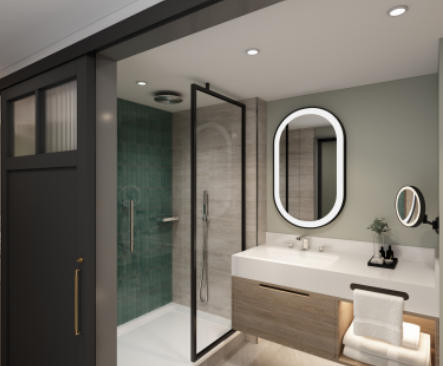
Introduction: Why Timing Matters in Hotel Bathroom Design
In many hotel projects, bathroom mirrors are specified relatively late in the design and construction process. They are often treated as finishing items, selected after the vanity, lighting layout, and electrical systems have already been planned. While this approach may seem convenient, it can lead to compromises in both lighting quality and installation efficiency.
Lighted hotel bathroom mirrors are not simply decorative accessories. They function as integrated lighting systems that directly affect how guests see themselves, how the bathroom feels, and how the entire space is illuminated. When mirrors are considered only as visual elements rather than as part of the lighting and electrical design, important technical factors—such as wiring, placement, and lighting performance—may be overlooked.
Late-stage mirror decisions can introduce several risks during hotel construction or renovation. Electrical layouts may not align with mirror requirements, mirror proportions may conflict with vanity dimensions, and lighting performance may suffer due to poor positioning. In some cases, these issues require design compromises or costly adjustments during installation.
For architects, interior designers, contractors, and hotel procurement teams, considering lighted mirrors earlier in the planning stage allows better coordination between lighting design, electrical infrastructure, and bathroom layout. When mirrors are integrated into the design process from the beginning, the result is a bathroom that performs more effectively, looks more balanced, and delivers a consistent experience across every guest room.
LED Mirrors Are Both Lighting Fixtures and Interior Elements
Lighted hotel bathroom mirrors serve a dual role. They are not only reflective surfaces within the interior design but also functional lighting fixtures that directly influence how the bathroom is illuminated. Because of this dual function, LED mirrors should be considered part of the overall lighting strategy rather than treated as standalone decorative elements.
At the vanity area, mirrors often provide the most effective face-level lighting for grooming and personal care. The way this lighting interacts with ceiling lights, wall sconces, or other ambient sources determines whether the bathroom feels balanced and comfortable. If the mirror lighting is not coordinated with the rest of the lighting scheme, the result may be excessive brightness, uneven illumination, or shadows that affect usability.
Electrical requirements also play an important role. LED mirrors require appropriate power supply points, concealed wiring routes, and safe installation methods within a humid environment. These technical considerations must align with the building’s electrical planning and bathroom wall construction. When these details are addressed early in the project, installation becomes straightforward and the lighting performs as intended.
For this reason, lighted mirrors should ideally be coordinated with lighting designers, architects, and electrical engineers during the early design stages. Early collaboration ensures that mirror placement, lighting output, and electrical infrastructure work together as a unified system, resulting in a bathroom that is both visually refined and technically reliable.
How Early Planning Improves Bathroom Lighting Design
When lighted mirrors are considered during the early design stages, the overall lighting strategy of the bathroom becomes easier to control and refine. Early planning allows designers to coordinate different lighting sources so that they complement each other rather than compete. The result is a bathroom environment that feels balanced, functional, and visually comfortable for guests.
Coordinating Mirror Lighting with the Overall Lighting Scheme
Effective bathroom lighting typically combines several layers, including ambient lighting from ceiling fixtures, task lighting at the vanity, and decorative elements that enhance the design. A lighted mirror plays a critical role within this system, particularly in providing clear illumination at face level.
By planning mirror lighting alongside other lighting fixtures, designers can achieve the right balance between brightness and comfort. This coordination helps prevent common problems such as excessive brightness near the vanity, uneven lighting distribution, or shadowing caused by poorly positioned ceiling lights.
Achieving Better Grooming Lighting
Guests rely on the bathroom mirror for daily grooming activities such as shaving, makeup application, or skincare. These tasks require even illumination across the face, which is difficult to achieve using overhead lighting alone.
Lighted mirrors provide illumination closer to eye level, reducing the shadows that typically occur when light is placed above the user. When planned correctly, this approach creates clearer, more natural lighting conditions that improve both functionality and guest satisfaction.
Maintaining Consistency Across Guest Rooms
In hotel environments, consistency is just as important as individual design quality. Guests expect a similar experience in every room, regardless of the floor or room category. Early planning ensures that lighting specifications—such as brightness levels, colour temperature, and distribution—remain uniform across all guest bathrooms.
By defining these parameters during the design phase, project teams can avoid variations that sometimes occur when mirrors are sourced or specified later in the project. This consistency helps reinforce the hotel’s design standards and ensures a reliable lighting experience throughout the property.
Electrical and Installation Planning
Lighted hotel bathroom mirrors require proper electrical coordination to ensure safe operation and smooth installation. Unlike standard decorative mirrors, LED mirrors depend on a reliable power supply, concealed wiring, and secure mounting methods. When these requirements are addressed early in the project, both the lighting performance and the installation process can be managed more efficiently.
One of the first considerations is the power supply and wiring arrangement for the mirror. Electrical connection points must be positioned accurately behind or near the mirror location so that cables remain hidden while still allowing safe access for installation. If these details are overlooked during early planning, contractors may need to modify wall structures or reroute wiring during construction.
Cable routing within bathroom walls also needs careful coordination. In hospitality projects, walls often contain multiple services such as plumbing, electrical conduits, and waterproofing layers. Planning mirror wiring alongside these systems helps avoid conflicts and ensures that the mirror can be installed without damaging finished surfaces.
Another important decision involves choosing between plug-in and hardwired mirror installations. In most hotel environments, hardwired installations are preferred because they provide a cleaner appearance, improved durability, and better integration with the building’s electrical system. However, this approach requires proper electrical planning before wall finishes are completed.
By incorporating these considerations into the design stage, project teams can prevent costly installation changes later. Early coordination reduces the likelihood of electrical adjustments, minimises construction delays, and ensures that the mirror system functions exactly as intended once the bathroom is completed.
Vanity Design and Mirror Proportion
The relationship between the vanity and the mirror plays a significant role in how balanced and comfortable a hotel bathroom feels. When mirror selection is considered early in the design process, architects and interior designers can ensure that the mirror size and position align properly with the vanity layout and overall bathroom composition.
One important factor is aligning the mirror width with the vanity and sink placement. Mirrors that are too narrow can feel visually disconnected from the vanity, while oversized mirrors may appear disproportionate within smaller bathrooms. When mirror dimensions are coordinated with the vanity design, the result is a cleaner and more intentional visual structure.
Mirror height and sightlines also require careful planning. Hotel bathrooms must accommodate guests of different heights, and the mirror should provide a clear reflection without forcing users to adjust their posture. Positioning the mirror correctly relative to the sink and countertop ensures comfortable usability for a wide range of guests.
In many hospitality projects, mirrors are also integrated into the architectural design of the bathroom. They may align with wall panels, tile layouts, or vanity backboards to create a cohesive appearance. When mirrors are planned as part of the architectural composition, they contribute to a more refined and well-proportioned space.
If mirror decisions are postponed until late in the project, designers may have to compromise on size, placement, or alignment. Early planning allows the mirror to be incorporated naturally into the bathroom layout, avoiding last-minute adjustments that can affect both visual balance and functionality.
Moisture Protection and Safety Requirements
Hotel bathrooms are environments with constant humidity, steam, and temperature changes. Even outside of direct splash zones, mirrors are regularly exposed to condensation after showers and fluctuating moisture levels throughout the day. Over time, these conditions can affect electrical components if the mirror is not designed with adequate protection.
For this reason, mirrors used in hotel bathrooms should meet appropriate ingress protection standards. IP-rated mirrors are specifically designed to protect internal electrical components from moisture and environmental exposure. Specifying these ratings early in the project ensures that the mirror design aligns with the expected bathroom conditions and avoids safety risks once the space is operational.
Electrical safety compliance is another important consideration. Lighted mirrors must meet the relevant electrical standards required for bathroom environments, including safe insulation, proper grounding, and protected wiring systems. These requirements are easier to accommodate when mirrors are integrated into the electrical planning of the bathroom rather than added later.
During the specification stage, it is also essential to verify product certification and testing documentation. Confirming these details early helps designers and procurement teams ensure that the selected mirror meets safety and performance standards before construction progresses. This proactive approach reduces the likelihood of compliance issues, installation delays, or product replacement during later stages of the project.
Procurement and Manufacturing Considerations
Lighted hotel bathroom mirrors are often custom-built to suit the design requirements of a specific project. Unlike standard decorative mirrors that can be sourced quickly from general suppliers, custom LED mirrors require manufacturing time for fabrication, lighting integration, quality testing, and packaging. For this reason, lead times should be carefully considered during the planning phase of a hotel project.
Early specification allows procurement teams to coordinate production schedules with the overall construction timeline. When mirror manufacturing is aligned with project milestones, delivery can be scheduled to match the bathroom installation phase, reducing the risk of delays during fit-out. This coordination is particularly important for large hospitality developments where hundreds of mirrors may need to be delivered within a specific timeframe.
Consistency is another key factor in hotel projects. Guest rooms are expected to provide the same visual and lighting experience throughout the property. Achieving this requires careful manufacturing control to ensure that brightness levels, colour temperature, and product dimensions remain consistent across large production batches.
By specifying mirrors earlier in the design process, procurement teams gain greater flexibility in selecting manufacturers, confirming technical specifications, and scheduling production. This proactive approach reduces procurement risks, helps maintain project timelines, and ensures that the mirrors delivered to the site meet both design and performance expectations.
Why Hospitality Projects Benefit from Early Collaboration with Mirror Specialists
In hospitality projects, bathroom mirrors are most effective when they are treated as part of a coordinated system rather than as standalone products. Collaborating with mirror specialists early in the design process allows project teams to address both technical and design considerations before construction progresses too far.
During the design stages, mirror specialists can provide technical consultation on lighting performance, electrical requirements, and environmental conditions. This guidance helps designers understand how the mirror will function within the bathroom and how it interacts with other lighting elements. Early input can prevent design conflicts and improve the overall lighting quality of the space.
Mirror specialists can also support decisions related to sizing and proportion. By reviewing vanity layouts, wall dimensions, and sightlines, they can recommend mirror dimensions that align with both the design intent and the practical needs of guests. At the same time, lighting performance can be evaluated to ensure that brightness levels, colour temperature, and diffusion meet hospitality standards.
Effective coordination with architects, lighting designers, and contractors is another important benefit. When all parties collaborate early, mirror placement, wiring routes, and mounting systems can be integrated into the bathroom design from the start. This reduces installation challenges and ensures that the mirror functions properly once the space is completed.
Ultimately, early collaboration helps ensure that the mirror performs as part of the overall bathroom system. Rather than adapting the mirror to an already fixed environment, the design process can incorporate the mirror as a functional and visual component of the space, improving both usability and long-term reliability.
Why Hotels Work with Luma Mirrors by Gemm London
Hospitality projects require more than standard off-the-shelf products. Hotel bathrooms demand mirrors that combine reliable lighting performance, durable construction, and consistent design across large numbers of guest rooms. Luma Mirrors by Gemm London focuses on developing bespoke LED mirror solutions tailored specifically for hotel, cruise ship, large residential development guest bedrooms and bathrooms.
With experience supporting hospitality design and specification teams, Luma Mirrors understands the practical requirements involved in hotel construction and refurbishment projects. This includes coordinating with architects, interior designers, lighting consultants, and contractors to ensure that mirror systems integrate smoothly into the overall bathroom design.
Luma also provides custom options that allow each project to achieve the desired aesthetic and functional outcome. Mirrors can be produced in custom sizes and shapes to match vanity layouts and architectural details, while lighting configurations can be adapted to meet the project’s performance requirements.
For larger hospitality developments, production consistency is essential. Luma Mirrors by Gemm London maintains controlled manufacturing processes to ensure that brightness levels, colour temperature, and mirror dimensions remain uniform across all units. This helps hotels maintain a consistent guest experience throughout the property.
Contact Luma Mirrors by Gemm London
If you are planning a hotel development or refurbishment project, the Luma team can support you from the early design stages through to final installation. We work with hotel designers, architects, contractors, and procurement teams to develop LED mirror solutions that align with both design goals and technical requirements.
Our team can provide guidance on mirror sizing, lighting performance, electrical integration, and manufacturing timelines to help ensure a smooth project process.
Contact Luma Mirrors to discuss bespoke LED mirror solutions designed specifically for hospitality environments.
