
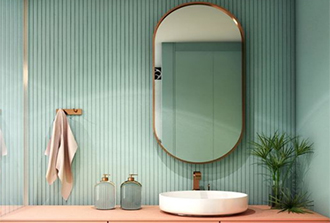
Large residential developments require bathroom products that meet multiple project demands at the same time, including design consistency, budget control, installation efficiency, and long-term reliability. Unlike individual purchases, large-scale residential projects often involve hundreds or even thousands of units, where product consistency, production capability, and supply stability directly affect project timelines and final quality.
As a result, LED mirrors have become an increasingly popular choice for modern apartments, condominiums, luxury residences, and serviced apartments. Beyond providing functional bathroom lighting, LED mirrors contribute to the overall interior experience by supporting contemporary design concepts, improving daily usability, and creating a consistent aesthetic across different residential units.
For developers, selecting the right LED mirror solution is not only about appearance. It requires careful consideration of specifications, customization options, manufacturing capability, quality control, and supplier support throughout the entire project lifecycle.
Why LED Mirrors Are Increasingly Used in Large Residential Projects
As residential projects continue to move toward higher-quality living standards, bathroom spaces have become an important part of the overall residential experience. Modern projects are no longer focused only on basic functionality; they increasingly require interior solutions that combine visual appeal, practical performance, and long-term reliability.
LED mirrors provide a combination of integrated lighting, contemporary design, and functional benefits, making them increasingly common in apartments, condominiums, luxury residences, and serviced apartment developments.
Enhancing Bathroom Design and Property Value
Bathrooms have become an important space that reflects the quality and positioning of a residential project. A well-designed bathroom can contribute to the overall impression of a property and create a more premium living environment.
LED mirrors enhance bathroom aesthetics by integrating lighting directly into the mirror structure, eliminating the need for additional wall-mounted lighting fixtures. This creates cleaner visual lines and supports a more modern, streamlined interior design approach.
With different options including backlit illumination, front lighting, customized sizes, and various finishes, LED mirrors can be coordinated with different residential concepts, from minimalist apartments to high-end luxury residences. The result is a more refined bathroom environment that aligns with contemporary interior expectations.
Improving Functional Lighting Performance
In addition to improving visual appeal, LED mirrors provide more effective lighting for everyday bathroom activities. Traditional ceiling lighting may create uneven illumination and shadows, which can reduce comfort during grooming, skincare, and other personal care routines.
By positioning integrated LED lighting closer to the user’s face, LED mirrors provide more balanced illumination and help minimize shadows. This creates a more comfortable and practical lighting environment for residents.
Additional features such as adjustable brightness, color temperature control, and anti-fog functionality can further improve usability while supporting different preferences and usage scenarios.
Supporting Consistent Interior Design Across Multiple Units
Large residential developments require a high level of consistency across multiple units and building phases. Product selection plays an important role in maintaining the intended design standard throughout the project.
A standardized LED mirror solution allows the same design language, specifications, and quality expectations to be applied across different apartments. This helps ensure visual consistency while simplifying coordination between bathroom layouts, interior finishes, and installation requirements.
For multi-unit residential projects, consistent LED mirror solutions provide a balance between design quality, practical functionality, and efficient project execution.
Key Considerations When Selecting LED Mirrors for Residential Developments
Selecting LED mirrors for a large residential project involves more than choosing a design that matches the interior concept. With multiple units, different apartment layouts, and strict project timelines, product specifications, consistency, and technical performance all play an important role in achieving a successful installation.
A well-planned LED mirror solution should support the overall bathroom design while ensuring reliable performance, efficient installation, and consistent quality throughout the development.
Product Consistency Across Multiple Units
For large-scale residential projects, consistency is one of the most important considerations. LED mirrors are typically installed across numerous bathrooms, meaning even small variations between units can affect the overall quality and appearance of the completed project.
Important factors include:
- Stable product dimensions
- Consistent LED color temperature
- Uniform mirror finishes
- Reliable quality control throughout production
Differences between production batches, such as variations in lighting color, mirror dimensions, or finishing details, can create challenges during installation, quality inspections, and final handover.
Working with a manufacturer that maintains strict production standards helps ensure every unit receives the same product quality and appearance, supporting a consistent interior experience across the entire development.
Custom Sizes and Bathroom Layout Compatibility
Residential projects often include multiple apartment types, each with different bathroom layouts and space requirements. A suitable LED mirror solution should be able to adapt to these variations while maintaining a consistent design direction.
Key considerations include:
- Selecting standard sizes that fit common bathroom configurations
- Developing customized dimensions for specific layouts
- Coordinating mirror sizes with vanity widths and bathroom cabinetry
- Ensuring proper installation within available wall space
For example, compact apartments or studio units may require smaller mirrors to maximize space efficiency, while luxury residences may use larger statement mirrors to create a more spacious and premium bathroom atmosphere.
Early coordination between mirror specifications, bathroom layouts, and interior finishes helps avoid installation issues and ensures the final design intent is achieved.
Lighting Specifications and User Experience
Lighting performance directly influences both the functionality and atmosphere of a bathroom. Different residential projects may require different lighting characteristics depending on their positioning, interior style, and target living experience.
Important lighting specifications to consider include:
- Color temperature options, such as 3000K, 4000K, and 6000K
- Brightness adjustment capabilities
- Dimming functions
- Color Rendering Index (CRI) performance
- Front-lit or back-lit mirror designs
Warm lighting around 3000K may create a more comfortable and residential atmosphere, while neutral lighting around 4000K is commonly selected for balanced everyday use. Higher color temperatures may be suitable for projects requiring a brighter and more contemporary appearance.
The choice of lighting design should align with the overall positioning of the residential project, ensuring that the LED mirror contributes to both visual consistency and daily usability.
Safety and Electrical Requirements
Because LED mirrors are commonly installed in bathroom environments, safety and compliance are essential considerations during product selection.
Key requirements include:
- Electrical certifications suitable for the target market
- Appropriate waterproof ratings for bathroom applications
- Reliable anti-fog performance
- Built-in electrical protection features
Bathrooms are high-moisture environments, and LED mirrors must be designed to operate safely under these conditions. Proper certification, moisture protection, and electrical reliability help reduce maintenance concerns and support long-term performance after installation.
Selecting products that meet relevant safety standards ensures that LED mirrors are not only visually appealing but also suitable for long-term residential use.
How LED Mirror Suppliers Support Large Residential Projects
For large residential developments, an LED mirror supplier plays an important role beyond product manufacturing. Successful project delivery requires close coordination throughout the process, from initial specification confirmation and sample approval to production, packaging, and shipment management.
A supplier with experience in project-based orders can help ensure that product requirements are clearly defined, quality remains consistent across large quantities, and delivery schedules are aligned with overall construction timelines.
Engineering Support Before Production
Before mass production begins, clear technical communication is essential to ensure that the final product meets project requirements.
Professional LED mirror suppliers should be able to support key pre-production processes, including:
- Technical drawings and product layouts
- Detailed product specifications
- Installation requirements and connection details
- Sample production and approval procedures
For large residential projects, early confirmation of dimensions, functions, materials, and installation methods helps prevent issues during later construction stages.
A structured sample approval process also allows project teams to verify product appearance, lighting performance, and functional details before full-scale production begins.
Mass Production Capability and Quality Control
Large residential developments often require hundreds or thousands of LED mirrors with identical specifications. Therefore, production capability and quality management are critical factors when selecting a manufacturing partner.
Important supplier capabilities include:
- Sufficient production capacity to meet project schedules
- Strict quality inspection procedures
- Consistent product performance across production batches
- Reliable packaging standards for large-volume orders
Consistency is especially important for multi-unit residential projects, where differences in mirror dimensions, lighting effects, or finishing quality can affect installation efficiency and final inspection results.
A professional manufacturing process ensures that each LED mirror meets the approved specifications, helping maintain the intended design standard throughout the entire development.
Project Packaging and Logistics Management
For large-scale projects, product protection and delivery coordination are essential parts of successful execution. LED mirrors contain fragile glass components and integrated electrical systems, making proper packaging critical during transportation.
Experienced suppliers should provide:
- Individual protective packaging for each mirror
- Export-standard packaging solutions
- Efficient container loading arrangements
- Delivery planning based on project schedules
Transportation damage can lead to replacement costs, installation delays, and additional coordination challenges during construction. Proper packaging and logistics management help ensure that products arrive safely and are ready for installation according to the project timeline.
Common Challenges When Purchasing LED Mirrors for Residential Developments
Selecting LED mirrors for a large residential project requires careful consideration beyond initial purchase costs. While price is an important factor, product reliability, consistency, and supplier coordination have a direct impact on installation efficiency, project quality, and long-term resident satisfaction.
Understanding common challenges in advance helps reduce potential risks during construction, inspection, and post-handover maintenance.
Choosing Low-Cost Products Without Considering Long-Term Performance
Lower-cost LED mirrors may appear attractive during the initial procurement stage, but insufficient attention to product quality can create additional challenges throughout the project lifecycle.
Potential issues include:
- LED lighting failure or reduced lifespan
- Uneven illumination caused by inconsistent LED components
- Moisture damage in bathroom environments
- Difficulty sourcing replacement products after project handover
Once a residential development is completed, replacing large quantities of installed mirrors can become costly and time-consuming. Selecting products with reliable components, proper protection, and stable performance helps reduce future maintenance concerns.
The focus should not only be on the initial product cost but also on long-term value, including durability, reliability, and after-sales support.
Lack of Standardization Between Production Batches
Large residential projects often require products to be manufactured and delivered in multiple batches. Maintaining consistency between batches is essential to ensure a uniform appearance across all units.
Potential problems caused by poor production control include:
- Different LED lighting colors between batches
- Variations in mirror dimensions
- Differences in accessories or product details
These inconsistencies can create difficulties during installation and final inspection, especially when multiple apartment units are expected to follow the same interior design standard.
Reliable production management and quality control processes help ensure that every batch matches the approved sample, reducing installation delays, quality complaints, and additional replacement costs.
Poor Coordination Between Supplier and Project Team
Clear communication throughout the project is essential for successful LED mirror implementation. Many issues occur not because of product limitations, but because specifications and expectations are not confirmed early enough.
Important coordination points include:
- Clear product specifications before production
- Sample approval before mass manufacturing
- Final confirmation of product details and quantities
- Delivery planning according to construction schedules
Early collaboration helps ensure that product design, technical requirements, and project timelines remain aligned. A supplier with strong project communication capabilities can provide better support from initial planning through final delivery.
Standard Specification Checklist for Residential LED Mirror Projects
Before placing an order for a residential LED mirror project, confirming key specifications in advance helps ensure smooth coordination between the product supplier, interior teams, and installation contractors.
A detailed specification checklist can help avoid design changes, installation issues, and inconsistencies during mass production.
| Category | Items to Confirm |
| Mirror Size | Width, height, thickness, and overall dimensions according to bathroom layouts |
| Lighting | LED type, color temperature, brightness level, CRI performance, and lighting direction (front-lit or back-lit) |
| Functions | Anti-fog technology, dimming options, touch sensors, motion sensors, switches, and other smart features |
| Safety | Required certifications, waterproof rating, electrical protection features, and compliance with local standards |
| Installation | Wall mounting method, electrical connection requirements, wiring position, and installation instructions |
| Customization | Custom sizes, logo application, frame options, finishes, accessories, and project-specific requirements |
| Packaging | Individual protection methods, export packaging requirements, and transportation safety considerations |
For large residential developments, confirming these details during the specification stage helps ensure that the selected LED mirror solution meets both design expectations and practical project requirements. Clear documentation also supports more efficient production, quality inspection, and installation coordination.
How to Evaluate an LED Mirror Manufacturer for Residential Projects
Choosing the right LED mirror manufacturer is an important decision for large residential developments. Beyond product appearance and pricing, the supplier’s manufacturing capability, technical experience, quality systems, and project support capabilities all influence the success of the final installation.
A reliable manufacturing partner should be able to provide consistent products at scale while supporting the specific requirements of each project from initial specification through final delivery.
Manufacturing Experience
Experience in handling project-based orders is an important factor when selecting an LED mirror manufacturer. Large residential developments require suppliers that understand the requirements of multi-unit projects, including product consistency, production scheduling, and international delivery coordination.
Key areas to evaluate include:
- Experience supplying LED mirrors for residential projects
- Export experience and understanding of international requirements
- Capability to support large-volume production
Manufacturers with proven project experience are better prepared to manage complex orders, maintain consistent quality, and meet required delivery timelines.
Customization Capability
Residential projects often have unique design concepts, bathroom layouts, and specification requirements. A capable LED mirror manufacturer should be able to provide flexible customization options rather than only offering standard products.
Important capabilities include:
- Developing project-specific mirror models
- Adjusting dimensions and configurations according to requirements
- Providing flexible options for lighting, functions, finishes, and accessories
Customization capability allows LED mirrors to integrate more effectively with different residential designs while maintaining production efficiency.
Quality Management
Consistent quality is essential when supplying hundreds or thousands of LED mirrors for a single development. A professional manufacturer should have a structured quality management process covering every stage of production.
Important quality control procedures include:
- Incoming material inspection for mirrors, LED components, electrical parts, and accessories
- Production testing during manufacturing
- Final inspection before shipment
A complete quality control system helps identify potential issues before delivery and ensures that finished products meet approved specifications.
Project Support
Large residential projects require continuous communication and coordination between suppliers and project teams. A manufacturer’s ability to provide effective project support can significantly influence delivery efficiency.
Important support areas include:
- Technical communication during specification stages
- Sample preparation and approval coordination
- Production progress updates and delivery planning
- After-sales support when required
A supplier that provides comprehensive project support helps ensure smoother execution, from product selection and approval to installation and long-term service.
Why Choose Luma Mirror for Large Residential Developments
Large residential projects require an LED mirror supplier that understands the demands of project-based manufacturing, from initial specification coordination to large-scale production and delivery. The right manufacturing partner should provide not only reliable products but also the technical support, consistency, and flexibility required for complex residential applications.
Luma Mirror combines professional LED mirror manufacturing experience with project-focused capabilities to support residential developments of different scales and requirements.
Professional LED Mirror Manufacturing Experience
With extensive experience in LED mirror production, Luma Mirror understands the importance of product consistency, functional performance, and design coordination in large residential applications.
From standard LED mirrors to customized solutions, each project is supported through a structured manufacturing process designed to meet specific product requirements and quality expectations.
Custom Solutions for Residential Projects
Residential developments often include different apartment layouts, bathroom configurations, and interior design concepts. Luma Mirror provides flexible customization options to help align LED mirror solutions with project specifications.
Customization support can include:
- Different mirror dimensions and configurations
- Lighting options and functional features
- Customized finishes and accessories
- Project-specific product requirements
This flexibility helps ensure that LED mirrors integrate effectively with the overall bathroom design and project vision.
Stable Production Capability and Quality Control
For large-volume residential projects, consistent production and reliable quality management are essential. Luma Mirror applies structured production procedures and quality inspection processes to maintain product performance across different orders and production batches.
From material selection and component inspection to final product testing and packaging, quality control is integrated throughout the manufacturing process to support stable project delivery.
Frequently Asked Questions About LED Mirrors for Residential Developments
What type of LED mirrors are commonly used in residential developments?
The most commonly selected LED mirror types for residential projects include backlit LED mirrors, front-lit LED mirrors, LED medicine cabinets, and customized bathroom mirrors.
Backlit LED mirrors are popular in modern residential interiors because they create a soft ambient lighting effect and a clean, contemporary appearance. Front-lit mirrors provide more direct facial illumination, making them suitable for bathrooms where functional lighting performance is a priority.
LED medicine cabinets combine mirror functionality with additional storage space, making them a practical choice for apartments where space efficiency is important. For premium residential developments, custom bathroom mirrors can be designed according to specific layouts, interior concepts, and project requirements.
Can LED mirrors be customized for apartment projects?
Yes. LED mirrors can be customized to match different apartment layouts, bathroom designs, and project specifications.
Common customization options include:
- Mirror dimensions and shapes
- Lighting options, including color temperature and brightness control
- Functional features such as anti-fog, sensors, and dimming
- Frame styles, finishes, and decorative details
- Installation requirements and electrical configurations
Customization allows LED mirrors to better integrate with different residential unit types while maintaining a consistent design language throughout the project.
How can consistent quality be maintained for hundreds of LED mirrors?
Maintaining consistency across large quantities requires careful planning and cooperation with an experienced LED mirror manufacturer.
Key steps include:
- Selecting a manufacturer with proven large-volume production experience
- Approving product samples before mass production
- Confirming detailed specifications in advance
- Ensuring strict production quality control throughout manufacturing
Clear specifications and quality inspections help ensure that all LED mirrors maintain consistent dimensions, lighting performance, finishes, and functional features across the entire development.
What certifications should residential LED mirrors have?
The required certifications for LED mirrors depend on the target market and project location. Residential projects should confirm that products meet relevant electrical safety and compliance requirements.
Important considerations include:
- Electrical safety certifications required in the destination market
- Compliance with local regulations and standards
- Suitable waterproof protection for bathroom environments
Since bathrooms are exposed to moisture and humidity, proper electrical safety, component protection, and waterproof performance are essential for long-term reliability.
How early should LED mirrors be selected in a residential project?
LED mirrors should ideally be considered during the bathroom design and specification stage, before final electrical planning and interior coordination are completed.
Early selection helps ensure:
- Proper integration with vanity sizes and bathroom layouts
- Correct electrical connection planning
- Coordination with wall finishes and interior elements
- Smooth approval and procurement processes
Including LED mirror specifications early in the project timeline helps reduce design changes and supports more efficient installation during later construction stages.
