
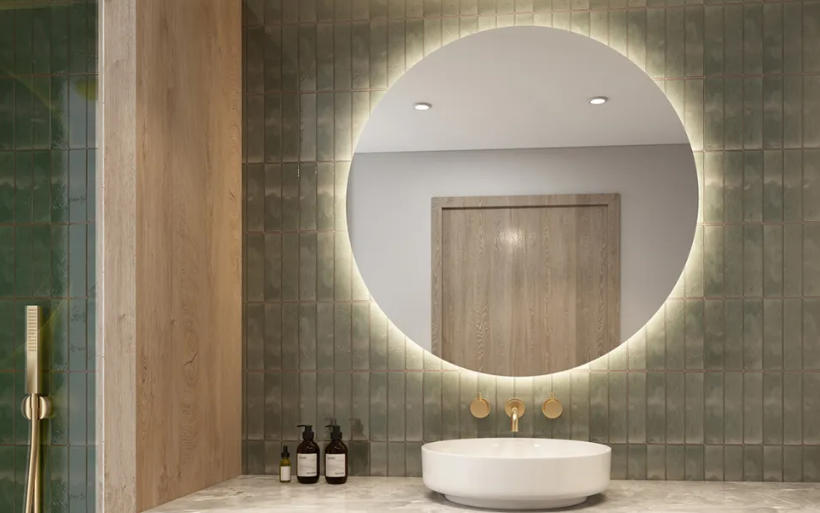
At first glance, a hotel bathroom mirror seems like a simple design choice.
A shape, a size, a light — selected to match the overall aesthetic of the room.
But in reality, it’s far more than that.
In hospitality environments, a mirror is an integrated system. It combines lighting, electrical components, moisture protection, user interaction, and installation requirements into a single product that needs to perform reliably every single day.
This is where many projects go wrong.
When mirrors are treated as decorative items rather than engineered elements, key details get overlooked — from lighting performance to demister coverage and installation constraints. These issues may seem minor at first, but in a hotel environment, they don’t stay small.
They scale.
A single oversight doesn’t affect just one room — it gets repeated across dozens, hundreds, or even thousands of guest bathrooms. What could have been a simple adjustment early in the design phase becomes a costly and time-consuming issue to fix later.
That’s why hotel bathroom mirror engineering isn’t just about design.
It’s about risk prevention.
Getting it right from the start ensures consistent performance, smoother installation, and a better experience for every guest — across every room.
What “Hotel Bathroom Mirror Engineering” Actually Involves
At its core, hotel bathroom mirror engineering is about bringing multiple disciplines together into one coordinated solution.
It’s not just about how the mirror looks. It’s about how it performs — under daily use, across hundreds of rooms, and within the constraints of a live project environment.
Each element must be considered in relation to the others. Overlooking one often impacts the rest.
Lighting Performance and Guest Usability
Lighting is one of the most critical — and most misunderstood — aspects of mirror design.
A mirror needs to deliver clear, functional task lighting for activities like shaving or applying makeup, while also contributing to the overall ambience of the bathroom.
That balance depends on:
- Colour Rendering Index (CRI) for accurate skin tones
- Colour temperature to match the room’s lighting scheme
- Light diffusion to eliminate shadows and glare
Poorly engineered lighting often looks impressive in concept renders, but fails in real use — creating uneven illumination or uncomfortable brightness for guests.
Electrical Integration and Smart Controls
Modern hotel mirrors are no longer standalone fixtures. They are part of a wider electrical and control system.
This can include:
- DALI integration for centralised lighting control
- Touch sensors or motion sensors for ease of use
- Integrated shaver sockets and power access
The key is early coordination with MEP (mechanical, electrical, plumbing) planning.
Without this, even well-designed mirrors can create installation conflicts or require last-minute compromises on site.
Moisture Protection and Thermal Management
Hotel bathrooms are high-humidity environments, and mirrors must be engineered to perform under these conditions long-term.
This involves:
- Demister systems designed with the correct coverage and output
- Sealing methods to protect internal components
- Appropriate IP ratings for electrical safety
A poorly specified demister or inadequate sealing doesn’t just affect performance — it leads to ongoing maintenance issues and a negative guest experience.
Manufacturing Consistency at Scale
What works in a single prototype doesn’t always translate to a full hotel rollout.
In large projects, consistency is everything.
Every mirror must deliver:
- The same brightness and colour output
- The same component quality and durability
- The same fit and finish
Without strict manufacturing control, variations between batches can lead to visible inconsistencies across rooms — something that immediately impacts the perceived quality of the space.
Installation and On-Site Constraints
Even the best-engineered mirror can fail if installation realities aren’t considered.
Key factors include:
- Wall substrates and fixing requirements
- Electrical access points and tolerances
- Time constraints during fit-out phases
In hospitality projects, installation often happens under tight deadlines.
Designs must therefore be practical, repeatable, and efficient to install — not just technically correct on paper.
Taken together, these elements define what hotel bathroom mirror engineering really is: a coordinated approach that ensures performance, consistency, and reliability — not just in one room, but across the entire project.
Why Most Hotel Bathroom Mirror Projects Go Wrong
Most issues with hotel bathroom mirrors don’t come from bad intentions — they come from decisions made too late, or without the full picture.
In hospitality projects, small oversights don’t stay small.
They repeat across every room, turning minor design gaps into operational problems.
Here’s where things typically go wrong.
Treated as a Decorative Item Too Late in the Process
One of the most common mistakes is leaving mirror selection until the final design stages.
At that point, the focus is usually on aesthetics — matching finishes, shapes, and overall style. But by then, key engineering decisions around lighting, electrical integration, and installation have already been locked in.
This leads to compromises:
- Limited options that actually fit the space
- Last-minute redesigns
- Or worse, a mirror that looks right but doesn’t perform properly
When engineering comes in too late, it becomes reactive instead of planned.
Lighting Designed for Looks, Not Function
Lighting is often driven by visual impact rather than real-world usability.
A mirror might look balanced in renders, but in practice:
- Light may be too dim for grooming tasks
- Or too harsh, creating glare and discomfort
- Shadows can form due to poor placement or diffusion
The result is a mirror that fails in its most basic function — something guests notice immediately, even if they can’t explain why.
Fogging and Moisture Failures
Hotel bathrooms see constant use, which means steam and humidity are daily conditions, not occasional ones.
When demister systems are:
- Missing
- Undersized
- Or incorrectly positioned
The mirror quickly becomes impractical.
This isn’t just a design flaw — it becomes a repeated guest complaint and a maintenance issue across the entire property.
Inconsistent Quality Across Rooms
What works in one sample or mock-up doesn’t always translate to full production.
Without proper engineering and quality control:
- Brightness levels can vary
- Colour temperature may shift between batches
- Components may differ in durability
These inconsistencies are especially noticeable in hospitality settings, where uniformity is expected across every room.
Installation Conflicts on Site
Even well-designed mirrors can run into problems if installation isn’t properly considered.
Common issues include:
- Misaligned electrical connections
- Incompatible wall fixings
- Insufficient tolerance for real site conditions
With tight project timelines, these conflicts often lead to:
- Delays
- On-site adjustments
- Or compromised installations
All of which increase cost and reduce overall quality.
Over-Spec or Under-Spec Decisions
Another frequent issue is getting the specification wrong — in both directions.
- Over-specification leads to unnecessary costs and features that don’t add real value
- Under-specification results in poor performance, shorter lifespan, and future replacement costs
The challenge isn’t adding more — it’s selecting the right features for the specific project.
In most cases, these problems are avoidable.
They come down to one core issue: a lack of early, coordinated engineering thinking.
Fix that — and most of these risks disappear before the project even reaches site.
How to Approach Hotel Bathroom Mirror Engineering (A Practical Workflow)
The difference between a smooth project and a problematic one often comes down to when and how engineering is introduced.
Rather than treating mirrors as a late-stage selection, successful projects follow a structured approach — one that aligns design, engineering, and delivery from the beginning.
Step 1 — Define Design Intent and Functional Requirements
Every project should start with clarity.
Not just how the mirror should look, but how it should perform in real use.
This includes:
- The overall aesthetic direction (shape, size, finish)
- Required lighting performance (task vs ambient balance)
- Functional features such as demisters, sensors, or integrated sockets
At this stage, it’s about setting both visual and performance expectations — so decisions later don’t become compromises.
Step 2 — Align Engineering with MEP and Lighting Plans
One of the most critical — and often missed — steps is early coordination.
Mirror design must align with:
- Electrical layouts
- Lighting schemes
- Control systems (e.g. DALI integration)
Bringing these elements together early prevents:
- Electrical conflicts
- Rework during installation
- Last-minute design changes
This is where engineering shifts from reactive to proactive.
Step 3 — Prototype and Validate Performance
Before moving into full production, the design needs to be tested in real conditions.
This includes validating:
- Lighting quality (brightness, diffusion, comfort)
- Demister performance under humidity
- User interaction (controls, accessibility, ease of use)
What looks good on paper doesn’t always perform in practice.
Prototyping ensures the mirror works as intended — before it’s replicated across hundreds of rooms.
Step 4 — Optimise for Manufacturing and Scale
Once the design is validated, the focus shifts to consistency.
A successful rollout depends on:
- Repeatable production processes
- Stable component sourcing
- Strict quality control across batches
The goal is simple:
every mirror must perform the same — regardless of when or where it’s produced.
Step 5 — Plan Installation and Project Delivery
The final step is making sure the solution works on site, not just in theory.
This involves:
- Defining fixing methods based on wall types
- Confirming electrical access and tolerances
- Planning logistics and installation timelines
In hospitality projects, time is limited.
Designs must be efficient to install, easy to replicate, and aligned with the wider project schedule.
When these five steps are followed, mirror engineering becomes a structured, predictable process — rather than a series of reactive decisions.
And that’s what ultimately ensures a smooth delivery, consistent performance, and a better experience across every room.
Final Thought — Good Engineering Is Invisible (But Critical)
In most cases, guests won’t comment on a mirror that works perfectly.
They won’t notice the lighting is well balanced.
They won’t think about the demister doing its job.
They won’t question why everything feels intuitive and consistent.
But they will notice when something is off.
A mirror that fogs up.
Lighting that feels harsh or uneven.
Controls that are confusing or unreliable.
In hospitality, these small details shape the overall experience.
And because hotels operate at scale, even minor issues don’t stay isolated — they repeat across every room, every day.
That’s why good engineering is so important.
Not because it stands out, but because it prevents problems before they ever reach the guest.
The decisions made early in the design and specification stage are what determine whether a mirror simply looks good — or performs reliably for years.
Partner Early with Luma Mirror to Get It Right
The most successful hotel projects don’t leave mirror decisions until the end — they bring the right partner in early.
At Luma Mirrors by Gemm London, collaboration is at the core of how every project is delivered.
Working together from the outset allows you to:
- Align bespoke mirror design with real project constraints
- Integrate lighting, electrical, and installation requirements from day one
- Avoid costly redesigns and on-site compromises
- Ensure consistent performance across large-scale rollouts
Whether you’re delivering a hotel, cruise ship, or large-scale residential development, Luma supports your guest bedroom and bathroom mirror requirements at every stage:
- Survey — understanding site conditions and requirements
- Planning & Design — translating your vision into engineered solutions
- Manufacture — delivering consistent, high-quality mirrors at scale
- Installation — ensuring smooth, efficient on-site execution
The goal is simple:
to create mirrors that don’t just look right — but work flawlessly in real hospitality environments.
Start the conversation early and bring your design to life with a solution built around your project — not forced into it.
