
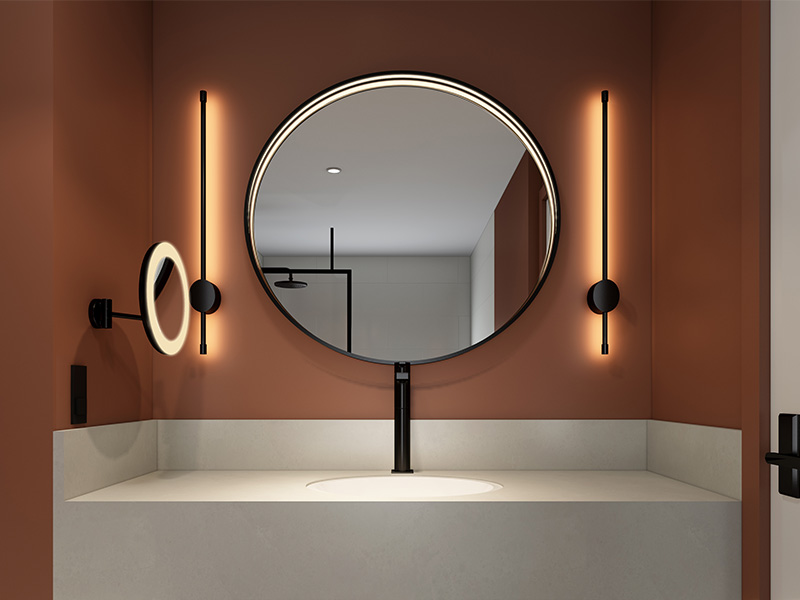
Hotel bathroom design has shifted dramatically in recent years. What was once a simple reflective surface is now a curated combination of lighting, comfort, and guest-experience technology. As expectations rise in both hotels and cruise ships, designers are moving away from basic, off-the-shelf mirrors toward custom LED mirrors built specifically for hospitality standards.
Custom mirrors have become a key element of brand identity. The right design enhances the visual quality of the bathroom, elevates grooming comfort, strengthens a hotel’s premium positioning, and directly influences how guests perceive value and cleanliness. In a competitive market where guest reviews and room impressions matter more than ever, lighting quality and mirror performance play a surprisingly important role.
Off-the-shelf mirrors often fall short: they are rarely sized correctly for vanities, lack consistent lighting across multiple room types, and typically don’t offer commercial-grade LED systems, demisters, or moisture protection. These limitations are exactly why leading hotel groups, designers, specifiers, and contractors now favour custom LED mirror solutions that ensure consistency, durability, and a cohesive design language throughout the project.
Here we’ll explain everything you need to know when specifying a custom LED mirror for hotel bathrooms from lighting choices and smart features to materials, sizing rules, technical specifications, system integration, and how specialist manufacturers support large-scale hospitality rollouts.
The Role of Custom LED Mirror for Hotel Bathroom Lighting & Guest Experience
1. How LED Mirrors Transform Guest Comfort
Custom LED mirrors have become one of the most influential elements in hotel bathroom lighting. When designed correctly, they significantly improve guest comfort by offering:
- Shadow-free grooming illumination
Front-lit and dual-lit mirrors eliminate harsh shadows, ensuring even light for shaving, skincare, and makeup. Guests notice this immediately especially in premium hotels.
- Accurate colour rendering (CRI ≥ 90)
High-quality LEDs help guests see natural, true-to-life skin tones. This is a major upgrade from standard mirrors with poor CRI values that distort colours and reduce clarity.
- Enhanced visibility in compact bathrooms
LED mirrors brighten corners, visually expand smaller layouts, and reduce the reliance on ceiling downlights.
- Lighting consistency across 100, 300, or 500 room sets
Custom mirrors allow hotel groups to standardise light temperature and brightness across all rooms, reinforcing brand identity and reducing variation between room types.
2. Impact on Guest Perception and Reviews
Lighting is one of the first things guests notice in a hotel bathroom and LED mirrors heavily influence that perception. They directly contribute to:
- A “bright, clean, modern” first impression
Mirror lighting improves how tiles, grout, surfaces, and fittings appear, making the bathroom feel more hygienic and premium.
- Higher guest satisfaction scores
Many negative hotel reviews mention poor lighting or dim bathrooms. High-quality custom LED mirror for hotel bathrooms prevent this issue entirely.
- Better social media impressions
Guests often take photos or videos in bathrooms. Good lighting enhances how the space looks online indirectly benefiting brand visibility.
Hotels that upgrade lighting often see an immediate improvement in guest sentiment, especially in 4- and 5-star markets.
3. Energy Efficiency and Smart Illumination
Custom LED mirrors offer long-term operational benefits that are essential for high-occupancy environments:
- Significant energy savings
LED systems consume far less electricity than traditional bulbs, helping hotels meet sustainability goals.
- Long lifespan in high-turnover rooms
Quality LED modules withstand frequent use, humidity, and daily cleaning reducing maintenance costs for engineering teams.
- Built-in night-light or low-glow modes for guest safety
Integrated lighting logic ensures guests can navigate the bathroom at night without switching on bright overhead lights, improving comfort and safety.
These smart lighting functions also reduce unnecessary energy use and support modern expectations of sustainable hotel operations.
Design Essentials: Shapes, Sizes, Finishes & Proportions in Custom LED Mirror for Hotel Bathrooms
1. Choosing the Right Shape
The shape of a custom LED mirror for hotel bathrooms influences both the mood of the space and how well it integrates with surrounding materials. Different shapes serve different architectural goals:
- Round : Softens angular bathroom layouts and creates visual balance. Ideal for boutique and modern hotels wanting a relaxed, elegant atmosphere.
- Arched : Signals premium design, often used in luxury suites or spa-inspired spaces. Adds height and sophistication without overwhelming the wall.
- Capsule / Pill Shape : A contemporary favourite. Works beautifully in narrow bathrooms or above double vanities where soft edges are preferred.
- Rectangular : The most versatile choice for standard rooms. Clean, simple, and compatible with nearly any design language.
- Custom Organic Shapes : Perfect for hotels or cruise ships seeking a signature look. Unique silhouettes can become a recognisable brand element across the property.
Luma supports all of these shapes with tailored lighting, proportions, and finishes.
2. Selecting the Ideal Size & Proportions
Proportion is one of the most important yet most overlooked aspects of specifying a luxury custom LED mirror for hotel bathrooms.
Key sizing principles:
- Mirror width should match or slightly undershoot vanity width
A common rule is mirror width = 70–100% of basin width, depending on visual preference and space.
- Height depends on bathroom layout
For compact bathrooms: shorter mirrors can help maintain balance.
For tall ceilings: extended height improves vertical rhythm and enhances lighting coverage.
- Oversized mirrors for suites
Larger mirrors maximise space perception and support luxury positioning in premium rooms.
- Consistency across multiple room types
Ensures a unified design identity across 50, 200, or 500 rooms which is essential for hotels and cruise ships.
Luma can prototype and CAD-check sizing to fit each vanity, wall elevation, and room type.
3. Coordinating With Guest Bathroom Finishes
LED mirrors interact directly with the materials around them. Designers should consider:
- Frame + Material Pairings
Marble : brass or brushed silver frames enhance the natural veining.
Brushed metals : match or contrast with taps and fittings (e.g., black tapware with black frames).
Porcelain tiles : neutral frames help maintain clean geometry.
Timber veneer : warm-toned frames (light oak, walnut) create boutique comfort.
- Light temperature plays a key role
Warm light complements timber and soft finishes.
Neutral light works for most porcelain or ceramic tiles.
Cool light enhances greys, stones, and crisp modern palettes.
- Tinted glass influences mood
Bronze, grey, rose, blue, and gold overlays subtly shift the visual tone of the bathroom.
Bathrooms feel more cohesive when mirrors are chosen with the full palette in mind, not as a last-minute fixture.
4. Frame Material & Finish Choices
Luxury mirrors go beyond aesthetics; materials must be durable, moisture-resistant, and engineered for hospitality use.
Premium frame options include:
- Brushed Brass : signals luxury and pairs beautifully with marble, gold tapware, and high-end suites.
- Black / Brushed Black : ideal for modern and industrial palettes, providing strong visual contrast.
- Timber Finishes (light oak, walnut, dark timber) : create warmth and boutique character in soft, natural interiors.
- Stainless Steel : offers exceptional durability for high-humidity or heavy-use environments, especially on cruise ships.
All Luma finishes are available with moisture-resistant, hospitality-grade coatings to ensure longevity in high-turnover bathrooms.
Lighting Design: Choosing Front-Lit, Backlit, or Dual-Lit Mirrors
1. Front-Lit Mirrors
Front-lit mirrors are the preferred choice for grooming tasks because they provide direct, even illumination across the face.
They minimise shadows under the eyes, chin, and jawline.
They create balanced light that improves visibility for shaving, skincare, and makeup.
They perform best when specified with high CRI values and the correct Kelvin temperature for the room’s palette.
Front lighting ensures guests feel confident in how they look, which is a key part of the hotel bathroom experience.
2. Backlit Mirrors
Backlit mirrors project a soft glow onto the wall behind the mirror, creating a subtle, ambient halo.
This indirect lighting enhances atmosphere and adds depth to the bathroom.
It works especially well with textured or tiled feature walls where the glow emphasises pattern and texture.
Hotels looking for a warm, boutique aesthetic often choose backlit mirrors to create a relaxed, premium feel.
Backlit mirrors are also useful in compact bathrooms because they visually lift the mirror off the wall.
3. Dual-Lit Systems
Dual-lit mirrors combine both front and back lighting for a premium, multi-layered effect.
They offer bright grooming clarity from the front and soft ambient glow from the back.
Many five-star hotels choose dual systems because they serve both functional and atmospheric needs.
Achieving uniform brightness across 100, 300, or 500 rooms requires controlled LED engineering and consistent specifications.
Dual-lit systems deliver the most balanced and luxurious result in high-end hospitality environments.
4. LED Placement Options
LEDs can be positioned in different zones depending on the lighting goals and the mirror shape.
Perimeter lighting surrounds the entire mirror for full halo uniformity.
Side strips offer strong vertical lighting ideal for grooming.
Top and bottom lighting creates balanced illumination for wider mirrors.
Custom placement is available for bespoke shapes or architectural requirements.
Luma supports all configurations and ensures LED placement aligns with both design intent and practical illumination needs.
Essential Hospitality Features: What Every Custom LED Mirror for Hotel Bathrooms Should Include
1. Demister (Anti-Fog Technology)
A demister is one of the most important features in hotel bathrooms because fogging is consistently listed as a top guest frustration, especially in compact or high-moisture environments.
Key considerations:
- Anti-fog clarity after showers ensures the mirror is immediately functional, improving the guest experience.
- Low-energy demisters offer similar performance while reducing operational costs across large room quantities.
- Safety compliance matters in hospitality; demisters must be correctly sealed and suitable for humid zones.
- Hotels aiming for premium guest satisfaction now treat demisters as standard, not optional.
2. PIR Motion Sensor
PIR (Passive Infrared) sensors enhance both comfort and safety through automatic illumination.
Benefits for hospitality:
- Night-time activation provides a soft orientation light when guests enter the bathroom, preventing bright light disruption.
- Energy savings because the mirror only activates when needed.
- Ideal for upscale guest rooms and cruise cabins where compact space and guest safety are priorities.
- Motion-activated mirrors also contribute to a modern, premium guest experience.
3. DALI Lighting Integration
For large hotels and cruise ships, DALI integration creates a consistent, centralised lighting ecosystem.
Advantages include:
- Centralised lighting control across entire properties, improving engineering efficiency.
- Scene-setting compatibility with room automation systems, helping hotels deliver signature lighting moods.
- Energy optimisation through intelligent dimming and time-based lighting rules.
- DALI-ready mirrors are a strong indicator of luxury because they support advanced building management systems.
4. USB or Shaver Socket
Power access is an increasingly important convenience for guests.
Key points:
- USB ports or shaver sockets allow guests to use grooming appliances without searching for an outlet.
- Bathroom compliance requirements must be observed, particularly in Zones 1 and 2 where sockets may have restrictions.
- Suitable for hotels that want to offer added convenience without cluttering the vanity area.
- This feature is especially helpful on cruise ships where space is limited.
5. Touchless Controls
Touch-free mirror controls add a layer of hygiene and sophistication.
Benefits:
- Better hygiene since guests avoid touching switches.
- A modern user experience aligned with smart room expectations.
- Reduced cleaning marks because fingerprints are minimised.
- Touchless systems create a seamless, premium feel in guest bathrooms.
Technical Specifications: What Designers and Contractors Must Know
Here are the specifications that directly influence compliance, installation quality, and long-term performance. These details determine whether the mirror is suitable for hotel bathrooms, cruise cabins, and large-scale hospitality environments.
1. Glass Quality and Clarity
Hotel-grade LED mirrors rely on high-quality glass to ensure performance and guest satisfaction.
- Low-iron glass for improved clarity
Low-iron substrates eliminate the green tint commonly seen in standard mirrors, producing a more accurate reflection and premium appearance.
- Distortion-free reflection
Essential for grooming and for ensuring guests feel confident in how they look. This is particularly important for luxury and premium hotel brands.
- Hospitality-grade safety backing
Prevents shattering in case of impact and is required for commercial installation standards.
- Tinting options (bronze, grey, rose, blue, gold)
Tinted glass affects ambience and can help coordinate mirrors with the bathroom’s material palette.
2. LED Performance
Lighting quality is the most visible marker of a premium LED mirror. Designers should specify:
- CRI 90 or higher
Ensures natural skin tones and accurate colour representation, critical for grooming tasks.
- Kelvin options from 2700K to 6000K
Warm tones (2700K–3000K) suit natural and timber finishes.
Neutral tones (3500K–4500K) blend well in modern designs.
Cool tones (5000K–6000K) complement stone, marble, and grey palettes.
- Lumen output and consistency
Sufficient brightness is needed for grooming without causing glare. Uniformity across room sets is crucial for hospitality projects.
- LED lifespan and maintenance
Long-lasting LEDs reduce maintenance costs for engineering teams, especially in properties with high room turnover.
3. Electrical and Safety Requirements
Hotel bathrooms require strict compliance with electrical and moisture-protection standards.
- IP44 or IP65 moisture ratings
Mirrors must be suitable for the zone they are installed in. Cruise cabins and compact bathrooms often require more robust moisture protection.
- Correct hardwiring standards
Commercial installations typically require concealed wiring with access points for maintenance.
- Moisture-resistant construction
Sealed LEDs, protected drivers, and corrosion-resistant materials ensure long-term reliability in wet environments.
Safety certification is a fundamental requirement for hospitality installations and should never be overlooked.
4. Installation Guidelines
Correct installation ensures longevity and reduces maintenance challenges.
- Fixing systems for tiled versus panelled walls
The substrate determines the correct bracket system. Tiled walls often require reinforced fixtures, while panelled walls may allow integrated mounting.
- Hidden brackets for clean aesthetics
High-end hotels expect discreet, seamless installations with no visible screws or attachments.
- Heater pad wiring
Demister systems require proper routing to avoid creating hotspots or compromising moisture protection.
- Preventing long-term wall damage
Correct spacing, venting, and material compatibility prevent cracking, warping, or moisture buildup behind the mirror.
A well-engineered mirror combined with correct installation ensures consistent performance across hundreds of rooms.
Manufacturing, Consistency and What to Expect From a Specialist LED Mirror Supplier
1. The Custom Production Process
A true hospitality-grade custom LED mirror is not a retail product; it is the result of a structured engineering and design process. Hotels, cruise ships, and large developments should expect the following steps:
- Survey and site review
Understanding wall conditions, wiring positions, bathroom layouts, and room set variations.
- CAD drawings
Technical drawings prepared for sign-off, ensuring every detail aligns with the design intent and MEP requirements.
- Lighting and performance tests
LED colour temperature, brightness levels, and diffusion are tested to ensure uniformity and compliance with hospitality standards.
- Prototype creation and approval
A sample mirror is built for physical review, allowing designers to confirm finishes, proportions, and lighting effects.
- Batch manufacturing
Once approved, mirrors are produced in controlled batches to maintain consistency across all units.
This structured approach ensures every mirror is fit for long-term commercial use.
2. Ensuring Consistency Across Large Hotel Rollouts
Large hospitality projects depend on absolute consistency across hundreds of room sets. A specialist manufacturer ensures:
- Matching colour temperature across all units
Prevents variations in lighting tone between different rooms.
- Repetition of frame finishes
Ensures identical appearance across floors, room types, and suites.
- Rigorous quality control for batches of 100, 200, or 500 mirrors
Each unit is tested for LED performance, demister function, wiring integrity, and finish quality.
Consistency across a full property is one of the most important hallmarks of a true hotel-grade mirror supplier.
3. What a True Hospitality Manufacturer Provides
Hotels and cruise ships require more than a product; they need full-service support from a specialist manufacturer. Key deliverables include:
- Technical support
Assistance with specifications, wiring diagrams, moisture zone compliance, and DALI integration.
- Installation
Professional fitting teams ensure clean, secure, and safe installation, with no visible brackets or wiring.
- Certification
Compliance documentation for electrical safety, moisture protection, fire regulations, and marine standards where required.
- Aftercare and ongoing support
Access to spare components, consistent communication, and rapid response for project teams.
This is where Luma stands out: hospitality is our core focus, not an add-on category.
Conclusion: Choosing the Right Custom LED Mirror for Your Hotel Bathrooms
Selecting the correct custom LED mirror impacts not only the look of a hotel bathroom but also the guest experience, operational efficiency, and the overall perception of quality.
Key considerations include:
- Lighting type and LED performance
- Shape, sizing, and proportion rules
- Frame materials and finishes
- Essential hospitality features like demisters, PIR sensors, DALI, and USB
- Technical specifications including CRI, Kelvin, IP ratings, and installation requirements
- Consistency across large room quantities
- Support from a manufacturer that understands hospitality
Custom LED mirrors deliver long-term value by improving guest satisfaction, supporting brand identity, and reducing maintenance challenges across large properties.
If you are planning a hotel, cruise ship, or large residential development, our team can design, manufacture, and install a bespoke LED mirror solution tailored to your specifications. We would be delighted to collaborate with you.
