
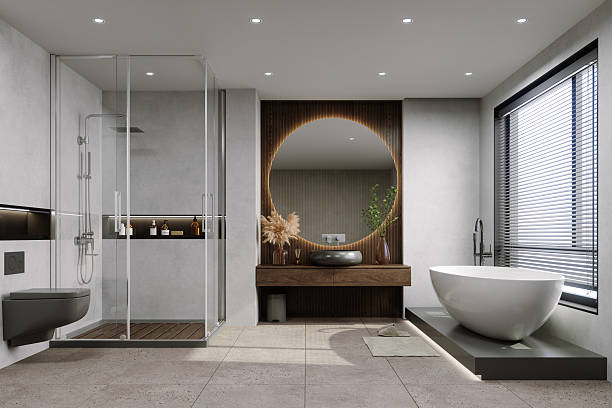
Introduction: Why LED Bathroom Mirrors Are Now Essential in Hotels
Hotel bathrooms have undergone a significant transformation in recent years, and LED bathroom mirrors now play a central role in shaping both the guest experience and the overall design narrative. Traditional mirrors offered reflection and very little else. Modern LED-integrated mirrors provide controlled lighting, clarity, comfort and advanced functionality, making them essential features in contemporary hotel, cruise ship and large scale residential project design.
Luxury hotels and premium cruise lines increasingly choose LED bathroom mirrors because they elevate the perception of cleanliness, improve grooming comfort and enhance the overall atmosphere of the space. The quality of light influences how guests feel in the bathroom, how finishes appear and even how the space photographs, which affects online reviews and the hotel’s brand reputation.
LED mirrors also deliver operational advantages. They reduce energy use, ensure consistent lighting across large room sets and integrate easily with smart systems such as motion sensors and centralised lighting controls. For designers, specifiers and contractors, they offer much greater flexibility in terms of lighting quality, proportion, finish and functional design.
In this guide, designers will learn the core design rules for LED bathroom mirrors, understand size and placement guidelines, review specification checklists, identify common mistakes and examine the benefits LED mirrors bring to both guest satisfaction and hotel operations.
Core Design Rules Every Interior Designer Should Know
Selecting the right LED bathroom mirror is not just a matter of choosing a shape or lighting type. In hospitality projects, mirrors must work harmoniously with the room architecture, lighting plan and material palette, while also meeting guest expectations for clarity, comfort and functionality. The following design principles help ensure LED mirrors enhance both the aesthetics and the usability of hotel bathrooms.
Proportion and Placement
Proportion is one of the most important aspects of mirror specification. The width of the mirror should align comfortably with the vanity or basin to create a balanced visual composition. A mirror that is significantly narrower or wider than the vanity can look misplaced and reduce the sense of cohesion. Designers should also consider height, ensuring the mirror is positioned at a level that accommodates the average guest while taking ceiling height and wall features into account. Correct placement also supports better light distribution and improved grooming comfort.
Shape Selection
The shape of a mirror has a direct influence on the character of the bathroom. Round mirrors introduce softness and symmetry, making them ideal for compact or minimalist bathrooms. Capsule mirrors work well in both narrow and wide layouts and offer a contemporary look that suits many hotel styles. Arched mirrors add height and elegance, creating a sense of architectural refinement. Rectangular mirrors are versatile and remain a strong choice for larger vanities or rooms that require a more structured aesthetic. Shape selection should always reflect the design intent of the wider space.
Light Direction and CRI
Lighting performance is a critical factor when specifying LED mirrors for hotels. Front-lit mirrors provide clear, task-focused illumination that is ideal for grooming, as they minimise shadows on the face. Back-lit mirrors offer softer ambience and are often chosen for their visual impact and calming effect. Dual-lit designs combine the benefits of both approaches and are preferred in premium suites where practicality and atmosphere are equally important. Designers should also consider the colour rendering index. A CRI of ninety or higher ensures accurate colour representation, which enhances the appearance of both skin tones and bathroom materials.
Material and Finish Coordination
An LED bathroom mirror should complement the materials and finishes within the room. Warm metallic frames work well with marble and natural stone, while black or brushed finishes pair effectively with modern tiles and monochrome interiors. Timber or timber-look finishes introduce warmth and can soften more contemporary schemes. Coordinating the mirror frame with taps, lighting fixtures or cabinetry supports a unified design language and strengthens the overall visual impact of the bathroom.
How LED Bathroom Mirrors Influence Guest Satisfaction
LED bathroom mirrors play a significant role in shaping how guests perceive a hotel room. They improve comfort, elevate the sense of luxury and directly influence how guests review their stay. In a market where guest experience is a major differentiator, lighting quality becomes an essential part of hotel design, not an optional upgrade.
Grooming Comfort and Confidence
One of the most immediate benefits of an LED bathroom mirror is the improvement in grooming comfort. High-quality mirrors provide shadow-free illumination that helps guests see their face clearly from all angles. A colour rendering index of ninety or above ensures that skin tones appear natural rather than distorted, which is important for activities such as shaving or applying makeup. When guests feel confident in how they look, their overall impression of the room naturally improves.
Perception of Cleanliness and Luxury
Good lighting enhances the visual quality of the bathroom. Bright, even illumination highlights clean surfaces, sharpens details and gives the space a more polished and luxurious feel. Bathrooms that are poorly lit can appear dated or less clean, even when they have been serviced to a high standard. LED mirrors create a consistent light source that reinforces the sense of care, precision and quality that guests expect in modern hotels, cruise ships and large scale residential projects.
Night-Time Visibility
Soft illumination from an LED mirror provides discreet lighting during the night, allowing guests to move safely without switching on overhead lights. This prevents sleep disruption and supports a more comfortable night-time experience. Motion-activated lighting enhances this further, guiding guests gently through the bathroom while maintaining a calm atmosphere.
Review and Social Media Impact
Lighting has a direct effect on how bathrooms photograph. Guests who feel good about the appearance of their bathroom are more likely to take photos and share them online. Even simple bathroom selfies or room shots contribute to a hotel’s online presence. When lighting is flattering and consistent, it positively influences guest feedback and helps strengthen the hotel’s visual identity across social media and review platforms.
How to Specify the Correct Size and Placement
Correctly sizing and positioning an LED bathroom mirror is essential in achieving both functional performance and visual balance. In hotels, cruise ships and large scale residential projects , mirrors must work within strict architectural layouts while maintaining a consistent appearance across multiple room sets. The following guidelines help ensure accuracy, efficiency and design harmony.
Mirror Width vs Vanity Width
A well-proportioned mirror typically aligns with the width of the vanity or basin. As a general rule, the mirror should be either equal in width or slightly narrower, usually by five to ten centimetres, to maintain visual balance. In compact bathrooms, a wider mirror can help create the perception of additional space, while in larger suites, oversized mirrors can emphasise luxury and openness. Designers should always consider the width of taps, basin placement and wall spacing to ensure the mirror integrates seamlessly with surrounding elements.
Height Recommendations
The height of the mirror affects usability, lighting performance and the overall sense of scale in the bathroom. In standard rooms, mirrors are typically positioned so that the top edge sits approximately at eye level for the average guest. In luxury suites with higher ceilings, a taller mirror can create a more dramatic vertical presence and enhance the sense of openness. Designers should also consider how the height interacts with wall lighting or integrated LEDs to ensure even illumination across the face.
Placement Relative to Tiles, Taps and Lighting
Precise placement is essential in achieving a clean, professional installation. The mirror should align with tile lines to avoid awkward cuts or misaligned grout joints, which can disrupt the design. The relationship between the mirror and tap height should also be carefully considered, ensuring the reflection line is clear and functional. Lighting placement is equally important. Mirrors positioned too close to wall lights or windows may create glare or uneven illumination. Proper spacing ensures a consistent lighting effect and avoids unwanted reflections.
Specifications Checklist for Hotel LED Bathroom Mirrors
Selecting the right LED bathroom mirror for a hotel, cruise ship or large scale residential project requires more than choosing a shape or lighting style. The specification must ensure consistency, safety, durability and performance across dozens or hundreds of room sets. This checklist outlines the essential technical and construction standards that designers and contractors should review before approving a mirror for hospitality use.
Technical Requirements
A high-quality LED mirror must meet specific lighting and electrical standards to perform reliably in guest bathrooms. A colour rendering index of ninety or higher ensures accurate colour representation, particularly for skin tones and materials. The colour temperature should remain consistent across all rooms to maintain a unified visual identity. LED lifespan and wattage should also be confirmed, with efficient modules providing long-term performance and reduced maintenance. Moisture exposure is unavoidable in hotel bathrooms, so an ingress protection rating of IP44 or above is essential for guest safety and electrical reliability.
Construction Quality
The construction of the mirror determines how well it withstands the conditions of daily hospitality use. Low-iron glass provides clear, accurate reflection without the green tint associated with standard mirror glass. Moisture-resistant backing materials prevent warping, black spots and deterioration over time. LED modules should be fully sealed to protect against steam and condensation, which helps prevent failures and ensures consistent lighting performance throughout the mirror’s lifespan.
Frame and Finish
The frame and finish influence both durability and visual integration with the bathroom design. Metal frames such as brass, stainless steel or aluminium offer strong resistance to corrosion. Timber and timber-look finishes can introduce warmth but must be properly treated for moisture resistance. Frameless designs are suitable for minimalist schemes and are often used in contemporary hotel bathrooms. Designers should match finishes to existing fixtures and materials to ensure a cohesive look.
Smart Features
Modern hotel bathrooms increasingly rely on smart features to improve guest comfort and operational efficiency. Demisters ensure a clear reflection immediately after a shower and reduce the need for housekeeping to wipe mirrors. PIR motion sensors provide automatic night lighting for safety. DALI integration allows centralised control and energy management across large room sets. USB ports offer convenient charging points for grooming devices, particularly in compact or cruise ship bathrooms. Prioritising these features can significantly enhance the guest experience and streamline hotel operations.
10 Mistakes to Avoid When Selecting Hotel LED Bathroom Mirrors
Choosing the wrong LED mirror can lead to inconsistent guest experiences, costly replacements and installation challenges across multiple room sets. These common mistakes highlight the areas designers and contractors should review carefully before final specification.
Inconsistent Colour Temperature Across Rooms
A mismatch in colour temperature creates visual inconsistency and can undermine brand identity. Hotels must specify a single Kelvin temperature for all mirrors to ensure a unified lighting effect from room to room.
Incorrect Mirror Sizing
Mirrors that are too small or too large disrupt the proportion of the vanity and wall layout. Correct sizing should follow established width-to-vanity ratios and consider the room category, ceiling height and design intent.
Poor LED Diffusion and Hotspots
Uneven lighting, visible LED dots or hotspots reduce the perceived quality of the mirror. High-grade diffusion materials ensure smooth, shadow-free illumination that enhances the bathroom’s overall appearance.
Low CRI LEDs
LEDs with a colour rendering index below ninety can distort skin tones and material colours. High-CRI lighting is essential for grooming comfort and for showcasing the true finish of tiles, stone and metals.
No Consideration for Maintenance Access
Hotel bathrooms require products that are easy to service. Mirrors without accessible components or clear maintenance instructions can cause delays, increased costs and operational issues.
Overlooking IP Ratings
LED mirrors installed near basins or showers must meet appropriate moisture protection standards. An IP44 or higher rating is required to ensure safety and prevent electrical failures in wet environments.
Mismatched Finishes
Choosing finishes that do not align with taps, hardware or room palettes can disrupt the bathroom’s visual harmony. Designers should review samples and confirm finish compatibility early in the project.
Not Planning for Demisters
Fogging is a frequent guest complaint. Specifying mirrors without demisters can reduce convenience and increase housekeeping workload, especially in high-occupancy hotels and cruise ships.
Unclear Mounting Requirements
Unspecified mounting systems lead to issues during installation. Clear guidance on fixing points, wiring routes and weight support is essential for achieving a secure and clean fit.
Sourcing From Different Suppliers for Large Projects
Mixing suppliers often results in slight variations in colour temperature, finish, wiring and light quality. Consistency is crucial in hospitality projects, making single-source specification the most reliable approach.
Energy Efficiency Benefits of LED Mirrors in Hotel Bathrooms
Upgrading to LED bathroom mirrors offers hotels, cruise ships and large residential developments measurable long-term savings. Beyond improving guest experience, LED mirrors significantly reduce operational costs and support sustainability targets across entire room sets.
Reduced Energy Consumption
LED mirrors consume far less power than traditional incandescent or fluorescent lighting while delivering brighter, more consistent illumination. Their efficiency allows hotels to reduce overall energy usage per room without compromising lighting quality.
Longer Lifespan and Lower Maintenance Costs
High-quality LED modules offer a significantly longer lifespan than conventional bulbs, meaning fewer replacements and less disruption to occupied rooms. For large projects with hundreds of rooms, this translates into substantial maintenance savings and reduced operational downtime.
Integration With Smart Controls
LED mirrors can be paired with advanced hotel lighting systems such as DALI, dimmers and occupancy sensors. This enables centralised control, automated dimming, and energy optimisation based on guest presence. Smart integration not only improves efficiency but also enhances the user experience with intuitive, seamless lighting behaviour.
Sustainable Material Options
Modern LED mirrors can incorporate environmentally responsible materials such as low-iron glass and energy-efficient LED technology. These materials enhance clarity, performance and longevity while supporting the sustainability goals of hotels, large scale residential projects and cruise ship operators.
Why Choose Luma for Hotel LED Bathroom Mirrors
Luma Mirrors by Gemm London specialises in creating LED bathroom mirrors designed specifically for the demands of hospitality. Every product is engineered for consistency, durability, and visual excellence across large-scale hotel, cruise ship and residential projects.
Specialists in Guest Bathrooms and Guest Bedrooms
Our mirrors are purpose-built for hospitality environments, with performance, longevity and guest comfort at the core of every design.
Expertise Across Hotels, Cruise Ships and Large Developments
We work closely with interior designers, specifiers, main contractors, shipyards and marine fit-out teams to deliver high-quality LED mirror solutions at scale.
Bespoke Design, CAD Engineering and Prototyping
From concept sketches to detailed CAD drawings and prototypes, we collaborate with your team to create mirrors that match your exact aesthetic and technical requirements.
Advanced LED Systems With Smart Technology
Demisters, PIR sensors, USB ports, DALI integration and designer-specified lighting logic can all be incorporated into your mirror for a seamless guest experience.
Installation and Certification Across the UK
Our in-house installation team ensures that every mirror is fitted correctly and safely. We also provide minor works certification for complete project assurance.
Family-Run Reliability and Premium Service
As a family-run business, we value relationships, honesty and exceptional service. Clients trust us for consistency, clear communication and solutions that truly support their design vision.
Contact Our Team
We welcome designers, specifiers, main contractors, shipyards, marine fit-out teams and FF&E procurement companies to collaborate with us on upcoming projects.
Whether you are developing a luxury hotel, a new cruise ship, or a large residential scheme, our team is here to support you with bespoke LED mirror solutions that align with your design vision and technical requirements.
Contact Luma Mirrors today to discuss how we can design, manufacture and install mirrors that deliver lasting quality and elevated guest experience.
